Blog
How to Choose the Best Electric Knife Sharpener: A Complete Buying Guide
A sharp knife is more than just a kitchen tool — it is the foundation of efficient and enjoyable cooking. However, even the highest-quality knives will gradually lose their edge after repeated use. A dull knife not only makes food preparation slower but can also increase the risk of slipping and accidental injuries.
An electric knife sharpener offers a simple and effective solution by restoring the blade edge quickly and consistently. But with so many options available, how do you choose the best electric knife sharpener for your kitchen?
This guide will help you understand the key features, functions, and details you should consider before making a purchase.
1. Understand Your Knife Types Before Choosing a Sharpener
The first step in selecting an electric knife sharpener is knowing what types of knives you use most often.
Different knives require different sharpening methods:
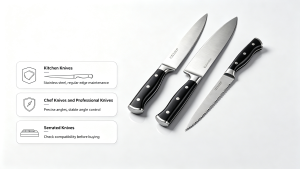
Kitchen Knives
Most household kitchen knives are made from stainless steel and require regular edge maintenance. A multi-stage electric sharpener is usually the best choice because it can handle sharpening, refining, and polishing.
Chef Knives and Professional Knives
Professional blades often require more precise sharpening angles. A quality sharpener should provide stable angle control to maintain the original blade geometry.
Serrated Knives
Some electric sharpeners are designed specifically for serrated blades, while others are mainly suitable for straight-edge knives. Always check compatibility before buying.
Tip: The best electric knife sharpener should be versatile enough to handle the knives you actually use every day.
2. Check the Sharpening Stages
One of the biggest differences between electric knife sharpeners is the number of sharpening stages.
Single-Stage Sharpeners
Single-stage models are usually designed for quick edge maintenance. They are simple to operate but may not provide a professional-level finish.
Two-Stage Sharpeners
Two-stage systems are more common:
Stage 1: Grinding
Repairs dull or damaged edges
Removes small amounts of metal
Creates a new sharp edge
Stage 2: Honing & Polishing
Smooths the blade edge
Improves cutting performance
Extends the sharpness duration
Three-Stage Sharpeners
Advanced models may include:
Coarse grinding
Fine sharpening
Polishing
These provide better results for users who want a sharper and more refined blade.
3. Pay Attention to Sharpening Angle Accuracy
The sharpening angle determines how the blade performs.
Common kitchen knife angles include:
15° angle: Extremely sharp, commonly used for Japanese-style knives
20° angle: A balanced option for most Western kitchen knives
25° angle: Stronger edge durability for heavier cutting tasks
A good electric knife sharpener should maintain a consistent angle automatically.
Unlike manual sharpening, where the angle depends heavily on user skill, electric sharpeners provide stable pressure and positioning, making sharpening easier for beginners.
4. Choose the Right Grinding Wheel Material
The grinding wheel is one of the most important components inside an electric knife sharpener.
Common materials include:
Diamond Abrasive WheelsAdvantages:✔ Fast sharpening performance✔ Suitable for hard stainless steel blades✔ Long service life
Ceramic WheelsAdvantages:✔ Fine polishing effect✔ Creates a smoother edge✔ Good for regular maintenance
Mixed Abrasive SystemsSome high-quality sharpeners combine different materials to achieve both fast sharpening and fine finishing.
When choosing an electric knife sharpener, the internal sharpening system matters more than just the outside appearance.
5. Consider Motor Power and Sharpening Stability
A powerful motor helps maintain consistent grinding speed, especially when sharpening thicker or harder blades.
However, higher power does not always mean better performance.
A well-designed electric knife sharpener should provide:
Stable rotation speed
Low vibration
Controlled grinding pressure
Reduced overheating
A balanced motor system protects the blade while delivering efficient sharpening results.
6. Look for Easy and Safe Operation
A good electric knife sharpener should make sharpening effortless.
Important user-friendly features include:Automatic Blade GuidanceThe sharpening slot helps position the knife correctly, reducing mistakes caused by incorrect angles.
Non-Slip BaseA stable structure prevents movement during operation.
Safety ProtectionFeatures such as overheating protection and secure blade slots improve user confidence.
For everyday home users, simplicity is often more valuable than complicated professional functions.
7. Check Cleaning and Maintenance Features
Knife sharpeners collect small metal particles during operation.
A practical design should include:
Easy-to-clean grinding areas
Removable dust collection tray
Durable housing materials
A cleaner sharpening system not only improves hygiene but also helps maintain long-term performance.
8. Electric Knife Sharpener vs Manual Sharpener
Many consumers wonder whether an electric sharpener is worth it compared with a traditional manual sharpener.
Feature
Electric Sharpener
Manual Sharpener
Ease of use
⭐⭐⭐⭐⭐
⭐⭐⭐
Sharpening consistency
High
Depends on skill
Learning curve
Very low
Requires practice
Speed
Fast
Slower
Suitable for beginners
Yes
Not always
For busy households, restaurants, and users who want reliable results, an electric knife sharpener provides a more convenient solution.
9. Choose a Reliable Electric Knife Sharpener Manufacturer
For retailers, distributors, and brands, product quality depends not only on the design but also on the manufacturing partner.
A reliable electric knife sharpener manufacturer should provide:✔ Stable production capability✔ Strict quality control✔ Customized product solutions✔ Professional packaging support✔ Continuous product improvement
At WANNIU Electric Appliance, we focus on developing practical and durable electric knife sharpening solutions designed for modern kitchens. From product design to mass production, we help customers create competitive kitchen appliance products for global markets.
Discover our latest electric knife sharpener models → Product Page
10. Frequently Asked Questions
How often should I use an electric knife sharpener?For normal household use, sharpening every few weeks or when the knife starts feeling dull is usually enough. Heavy users may need more frequent maintenance.
Can an electric knife sharpener damage my knife?A quality sharpener will remove only a small amount of metal when used correctly. Choosing the correct sharpening stage and avoiding excessive sharpening helps protect the blade.
Are electric knife sharpeners suitable for beginners?Yes. Most modern electric sharpeners are designed with automatic angle guidance, making them much easier than traditional sharpening methods.
Final Thoughts: Choosing the Right Electric Knife Sharpener
The best electric knife sharpener is not necessarily the most expensive model. The right choice depends on your knife types, sharpening needs, blade materials, and usage frequency.
When comparing different models, focus on:
Sharpening stages
Angle accuracy
Grinding wheel quality
Motor stability
Safety features
Ease of maintenance
A well-designed electric knife sharpener can transform dull knives into reliable kitchen tools and make daily cooking faster, safer, and more enjoyable. [...]
Read more...
Sharpening vs Honing: What’s the Difference?
Many people believe that sharpening and honing are the same thing. Both are related to keeping kitchen knives performing well, and both can make a knife feel sharper. However, they actually solve different problems.
Understanding the difference between sharpening and honing can help you maintain your knives properly, extend their lifespan, and choose the right tool for your kitchen.
Can Honing Replace Sharpening?
The simple answer is: No.
Honing can improve the performance of a knife that is slightly misaligned, but it cannot restore a truly dull blade.
Imagine a knife edge like a thin metal line:
If the line is slightly bent → honing can straighten it.
If the line has become worn away → sharpening is required.
Many people repeatedly hone dull knives and wonder why the cutting performance does not improve. The reason is that the blade has already lost its sharp edge.
How Often Should You Sharpen and Hone Your Kitchen Knives?
The ideal schedule depends on how often you cook and the type of knife you use.
Daily Cooking
For people who cook every day:
Hone: before or after frequent use
Sharpen: approximately every 2–6 months
Occasional Cooking
For lighter kitchen use:
Hone occasionally
Sharpen once or twice a year
Factors that affect sharpening frequency include:
Cutting surface material
Knife steel quality
Food preparation habits
Storage methods
What Is Knife Sharpening?
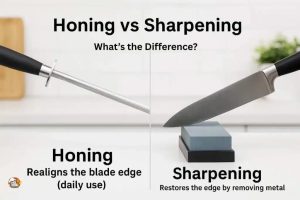
Sharpening is the process of removing a small amount of metal from the knife blade to create a new, sharper edge.
Over time, repeated cutting causes the knife edge to become dull. The very thin cutting edge may become rounded, damaged, or worn away. Sharpening restores the blade by grinding away the damaged metal and forming a fresh edge.
Common sharpening tools include:
Electric knife sharpeners
Whetstones
Manual sharpeners
Professional sharpening machines
Unlike simple maintenance, sharpening actually changes the shape of the blade edge.
When Does Your Knife Need Sharpening?
Your knife likely needs sharpening when:
✔ It struggles to slice tomatoes or soft vegetables✔ You need to apply extra pressure while cutting✔ The blade slips instead of cutting smoothly✔ Paper cutting tests become difficult
A sharp knife should cut with minimal effort and provide better control.
What Is Knife Honing?
Honing does not remove significant amounts of metal from the blade. Instead, it realigns the tiny edge of the knife that bends slightly during normal use.
Even a sharp knife can lose cutting performance because the microscopic edge becomes misaligned.
A honing rod pushes the edge back into position, helping the knife regain its smooth cutting ability.
Honing Is More Like Knife Maintenance
Think of honing as regular care for your knife.
For example:
Sharpening = repairing and rebuilding the cutting edge
Honing = maintaining the existing edge
Many professional chefs hone their knives frequently because it keeps the blade performing well between sharpening sessions.
Sharpening vs Honing: Key Differences
Feature
Sharpening
Honing
Main purpose
Creates a new sharp edge
Straightens the existing edge
Removes metal
Yes
Very little or none
Frequency
Every few months depending on use
Before or after regular use
Tools
Electric sharpener, whetstone
Honing rod
Best for
Dull or damaged knives
Maintaining already sharp knives
Can Honing Replace Sharpening?
The simple answer is: No.
Honing can improve the performance of a knife that is slightly misaligned, but it cannot restore a truly dull blade.
Imagine a knife edge like a thin metal line:
If the line is slightly bent → honing can straighten it.
If the line has become worn away → sharpening is required.
Many people repeatedly hone dull knives and wonder why the cutting performance does not improve. The reason is that the blade has already lost its sharp edge.
How Often Should You Sharpen and Hone Your Kitchen Knives?
The ideal schedule depends on how often you cook and the type of knife you use.
Daily Cooking
For people who cook every day:
Hone: before or after frequent use
Sharpen: approximately every 2–6 months
Occasional Cooking
For lighter kitchen use:
Hone occasionally
Sharpen once or twice a year
Factors that affect sharpening frequency include:
Cutting surface material
Knife steel quality
Food preparation habits
Storage methods
Why Electric Knife Sharpeners Make Sharpening Easier
Traditional sharpening methods require experience to maintain the correct angle and apply the right pressure. For beginners, achieving consistent results can be challenging.
Modern electric knife sharpeners simplify the process by using:
Precise sharpening angles
Multi-stage sharpening systems
Diamond abrasive wheels
Stable grinding performance
This allows users to restore knife sharpness quickly without years of sharpening experience.
For households, restaurants, and professional kitchens, an electric sharpener can be a practical solution for maintaining multiple knives efficiently.
How to Choose Between a Honing Rod and an Electric Knife Sharpener?
The best choice depends on your knife condition.
Choose a Honing Rod If:
✔ Your knives are already sharp✔ You want daily edge maintenance✔ You regularly maintain professional knives
Choose an Electric Knife Sharpener If:
✔ Your knives have become noticeably dull✔ You want fast and consistent sharpening✔ You have multiple kitchen knives to maintain✔ You prefer an easy sharpening method
Many kitchens actually benefit from using both: honing for daily maintenance and sharpening for restoring performance.
Keep Your Knives Performing Like New
A good knife is an investment. Proper maintenance not only improves cutting performance but also makes cooking safer and more enjoyable.
While honing helps maintain your knife’s condition, sharpening is the key step when the blade starts losing its cutting ability.
With the right sharpening solution, even older kitchen knives can be restored to smooth, precise cutting performance.
A reliable electric knife sharpener provides an easy way to bring dull knives back to life — helping home cooks save time, reduce effort, and enjoy better cooking experiences every day.
Discover Our Professional Electric Knife Sharpeners → [...]
Read more...
Can You Sharpen a Serrated Knife with an Electric Sharpener?
Understanding Serrated Knives Before Sharpening
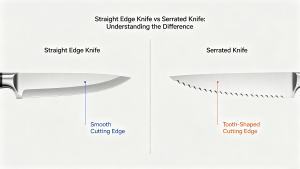
Serrated knives are popular in many kitchens because of their unique cutting ability.Unlike traditional straight-edge knives, serrated knives have a series of small teeth along the blade edge. These teeth allow the knife to easily cut through foods with tough surfaces and soft interiors, such as bread, tomatoes, cakes, and some fruits.
However, like any other knife, a serrated knife will eventually lose its cutting performance.This leads many users to ask:
Can you sharpen a serrated knife with an electric sharpener?The answer is: it depends on the design of the electric knife sharpener and the type of serrated blade.
Understanding how serrated knives work is the first step to choosing the right sharpening method.
1. Why Serrated Knives Are Different from Regular Knives
A standard kitchen knife has a continuous cutting edge.During sharpening, the entire blade edge can contact the sharpening surface, allowing the sharpener to restore the edge evenly.
A serrated knife works differently.
Instead of one continuous edge, it contains multiple small teeth and curved sections called gullets.Each tooth does the cutting work individually.Because of this special structure, sharpening a serrated knife requires a different approach compared with a chef’s knife or utility knife.A sharpening method designed for straight blades may not always be suitable for serrated edges.
2. Can an Electric Knife Sharpener Sharpen Serrated Knives?
Many modern electric knife sharpeners are designed mainly for straight-edge kitchen knives.They work by using rotating abrasive wheels that sharpen both sides of the blade edge while maintaining a consistent angle.For serrated knives, the situation is more complicated.
Some electric sharpeners include dedicated sharpening stages that can support certain serrated blades, especially lightly serrated edges.However, traditional large-tooth serrated knives usually require more specialized sharpening methods.
Before using an electric sharpener, it is important to check:
Whether the sharpener supports serrated bladesThe size and shape of the serrationsThe manufacturer’s recommendations
Using the wrong sharpening method may reduce the effectiveness of the serrations.
3. How Are Serrated Knives Normally Sharpened?
Unlike straight knives, serrated knives are usually sharpened by focusing on each individual tooth.Traditional methods often use a small tapered sharpening tool that matches the size of the serration.
The process involves:
Sharpening each serrated tooth individually
Maintaining the original tooth shape
Removing minimal material
Preserving the blade design
This process requires more patience and skill compared with sharpening a normal kitchen knife.
4. Can You Use a Regular Electric Knife Sharpener on a Serrated Knife?
The short answer:
Not always.
A regular electric knife sharpener designed only for smooth blades may not properly fit the shape of serrated edges.Possible problems include:
Uneven SharpeningThe sharpening wheel may only contact part of the serrated edge.
Damaging the SerrationsRemoving too much material can change the original tooth shape.
Reduced Cutting PerformanceIncorrect sharpening may affect how the knife cuts.
For this reason, users should always confirm compatibility before sharpening serrated knives with an electric sharpener.
5. Which Knives Work Best with an Electric Knife Sharpener?
Most electric knife sharpeners are ideal for:
✔ Chef knives✔ Kitchen knives✔ Utility knives✔ Paring knives✔ Slicing knives✔ Straight-edge blades
These knives benefit greatly from:
Controlled sharpening angles
Multi-stage sharpening systems
Consistent edge restoration
For households that mainly use traditional kitchen knives, an electric knife sharpener can provide a convenient and efficient maintenance solution.
6. Choosing an Electric Knife Sharpener for Different Knife Types
When selecting an electric knife sharpener, consider your actual knife collection.A good model should clearly explain:
Compatible Knife Types
Check whether it supports:
Straight edge knives
Serrated knives
Scissors
Specialty blades
Sharpening Stages
Different stages may provide:
Edge repair
Sharpening
Polishing
Blade Guidance System
A stable guide helps maintain consistent sharpening results.
7. How to Maintain Serrated Knives Properly
Even though serrated knives do not require frequent sharpening, proper maintenance can help extend their performance.
Helpful tips include:
Use the Right Cutting SurfaceAvoid cutting on extremely hard surfaces such as glass or stone.
Clean and Store ProperlyMoisture and improper storage can affect blade condition.
Sharpen Only When NeededUnlike straight knives, serrated knives usually maintain their cutting ability for a longer time.
Over-sharpening is unnecessary.
8. A Better Solution for Everyday Kitchen Knife Care
For most households, the majority of frequently used knives are straight-edge blades.
A reliable electric knife sharpener can make daily knife maintenance much easier by providing:
Faster sharpening
More consistent results
Less manual effort
Better cutting performance
Instead of waiting until knives become frustrating to use, regular sharpening helps maintain a better cooking experience.
9. Choosing the Right Electric Knife Sharpener for Your Kitchen
Before purchasing an electric knife sharpener, consider your knife collection and usage habits.
Ask yourself:
Do I mainly use straight-edge kitchen knives?
Do I need professional sharpening performance?
Do I prefer simple operation?
Does the sharpener support the knives I own?
Choosing the correct tool ensures better results and protects your valuable knives.
Make Every Knife Perform Better
So, can you sharpen a serrated knife with an electric sharpener?
The answer depends on the sharpener design and the serrated blade type.
While many electric knife sharpeners are excellent for straight-edge kitchen knives, serrated knives often require specialized care.
Understanding your knives and choosing the right sharpening solution will help maintain better cutting performance and extend the life of your kitchen tools.
A quality electric knife sharpener is not just a convenience — it is a simple way to keep your everyday kitchen knives ready whenever you need them.
Keep Your Kitchen Knives Sharp with the Right Solution
Looking for an efficient way to maintain your kitchen knives?
Explore our electric knife sharpener solutions designed for convenient, consistent, and user-friendly sharpening.
👉 Discover Our Electric Knife Sharpener Collection [...]
Read more...
How to Choose a Reliable Electric Knife Sharpener Manufacturer
Introduction: Finding the Right Manufacturing Partner Matters
The electric knife sharpener market has continued to grow as more consumers look for convenient kitchen solutions that save time and improve cooking efficiency.
For brands, distributors, and retailers, choosing the right electric knife sharpener manufacturer is not only about finding a supplier with competitive pricing.
A reliable manufacturing partner should provide:
Stable product quality
Professional engineering support
Consistent production capability
Flexible customization options
Reliable delivery performance
The right manufacturer can help your brand develop products that stand out in an increasingly competitive kitchen appliance market.
So, how can you identify a trustworthy electric knife sharpener supplier?
1. Evaluate the Manufacturer’s Industry Experience
Experience is one of the most important factors when selecting a manufacturing partner.
An experienced electric knife sharpener manufacturer understands:
Knife sharpening technology
Motor and mechanical design
Safety requirements
Material selection
Production challenges
Market trends
A factory that has worked with different markets and customers usually has stronger problem-solving ability.
For example, experienced manufacturers can better handle:
Different voltage requirements
Packaging requirements
Product appearance customization
Functional improvements
Quality control standards
Choosing a supplier with relevant industry experience reduces development risks and helps ensure smoother cooperation.
2. Check Manufacturing Capability and Production Capacity
A reliable supplier should have sufficient manufacturing capability to support your business growth.
Before cooperation, consider:
Production Equipment
Modern production equipment helps improve:
Assembly efficiency
Product consistency
Manufacturing accuracy
Production Capacity
The manufacturer should be able to handle both:
Trial orders
Large-scale production
A factory that can support flexible order quantities gives brands more confidence when entering new markets.
Quality Control Process
A professional factory should have inspection procedures covering:
Incoming materials
Assembly process
Finished products
Performance testing
Packaging inspection
Quality control is not only about checking finished products. It should be integrated throughout the entire production process.
3. Look for Strong R&D and Product Development Support
A good manufacturer should not only produce existing products.
They should also help customers create better solutions.
In the competitive kitchen appliance market, product differentiation is important.
A capable electric knife sharpener factory should be able to support:
Product Design
Including:
Appearance design
Structural optimization
User experience improvement
Engineering Development
Including:
Motor selection
Internal structure improvement
Noise reduction
Performance optimization
Customization Options
Depending on your brand requirements, customization may include:
Logo printing
Color changes
Packaging design
Function adjustments
Accessories
A supplier with strong R&D capability can help transform ideas into market-ready products.
4. Pay Attention to Product Quality and Testing Standards
For kitchen appliances, reliability and safety are critical.
A professional electric knife sharpener manufacturer should have strict quality testing procedures.
Important testing areas include:
Electrical Safety Testing
Checking:
Voltage compatibility
Power stability
Electrical protection
Performance Testing
Evaluating:
Sharpening efficiency
Motor performance
Working stability
Durability Testing
Ensuring the product can withstand repeated daily use.
A reliable manufacturer should focus on long-term product performance instead of simply reducing production costs.
5. Review Customization and OEM/ODM Capability
For many brands, OEM and ODM services are essential.
A manufacturer with strong customization capability can help you create products that match your market positioning.
Common OEM/ODM services include:
Branding Customization
Logo printing
Brand color selection
Customized packaging
Product Customization
Housing design adjustments
Feature upgrades
User interface improvements
Market-Specific Solutions
Different markets may require different:
Plug types
Voltage standards
Certifications
Packaging languages
A flexible supplier can provide solutions based on your target market.
6. Consider Communication and Customer Support
Many sourcing problems are caused by poor communication.
A reliable manufacturer should provide:
Fast response
Clear technical communication
Professional project management
Transparent production updates
Good communication helps avoid misunderstandings during:
Product development
Sample approval
Production
Shipping
A supplier is not just a factory — they should be a long-term business partner.
7. Compare More Than Just the Price
Price is important, but it should not be the only deciding factor.
Choosing the lowest-cost supplier may lead to problems such as:
Unstable quality
Higher return rates
Delayed delivery
Limited support
A better approach is to evaluate the overall value:
Product Quality + Manufacturing Capability + Service + Long-Term Reliability
A slightly higher initial cost may create better business results in the long run.
8. Ask About Sample Development Before Mass Production
Before placing a large order, professional buyers usually request samples.
Sample evaluation helps confirm:
Product appearance
Sharpening performance
Noise level
User experience
Packaging quality
A trustworthy manufacturer should be willing to cooperate during the sample approval process and make improvements based on feedback.
9. Why Choosing the Right Electric Knife Sharpener Manufacturer Creates Long-Term Value
The right supplier can provide more than manufacturing.
They can help your brand:
Launch competitive products
Reduce development risks
Improve customer satisfaction
Build market reputation
In the kitchen appliance industry, product quality and reliability directly influence customer reviews and repeat purchases.
That is why selecting the right manufacturing partner is one of the most important decisions for your business.
Partner with an Experienced Electric Knife Sharpener Manufacturer
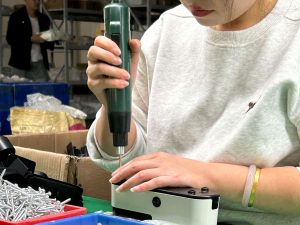
At Wanniu Electric Appliance Co.,Ltd, we focus on developing and manufacturing reliable electric knife sharpeners for global customers.
With professional production capabilities, product development experience, and flexible OEM solutions, we help brands create kitchen appliances that meet different market needs.
Whether you are looking for a new product solution, private label cooperation, or a long-term manufacturing partner, choosing the right supplier is the first step toward success.
Contact us today to explore your electric knife sharpener project.
👉 Explore Our Electric Knife Sharpener Solutions [...]
Read more...
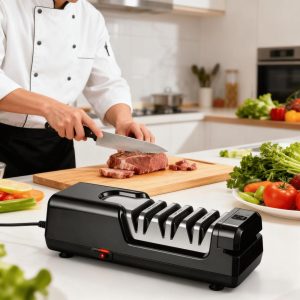
How Does an Electric Knife Sharpener Work? A Complete Guide to Restoring Your Knife’s Sharp Edge
Introduction: The Secret Behind a Sharp Kitchen Knife
A good kitchen knife is one of the most important tools in every home. However, even the highest-quality knife will gradually lose its sharpness after repeated cutting, chopping, and slicing.A dull knife does not only slow down food preparation. It can also affect cutting precision and make cooking less enjoyable.Many people think sharpening a knife requires professional skills or complicated equipment. But modern technology has changed the way we maintain our kitchen knives.An electric knife sharpener provides a simple and efficient solution by using motor-powered sharpening systems to restore the blade edge with less effort.
So, how does an electric knife sharpener actually work?Let’s explore the technology behind this convenient kitchen tool.
1. The Basic Principle of an Electric Knife Sharpener
At its core, an electric knife sharpener works through a simple but effective process:A motor rotates the sharpening wheels, and the abrasive surface removes a tiny amount of metal from the knife edge to rebuild a sharper cutting angle.Unlike traditional manual sharpening methods that rely heavily on hand control, electric sharpeners use built-in guides to help maintain a consistent sharpening position.This means users do not need years of experience to achieve better sharpening results.The machine does most of the technical work — controlling the speed, sharpening angle, and grinding process.
2. What Happens Inside an Electric Knife Sharpener?
Although the operation looks simple from the outside, several components work together inside the machine.① Powerful Motor SystemThe motor is the heart of an electric knife sharpener.When the power is switched on, the motor drives the internal sharpening wheels to rotate at a controlled speed.A stable motor helps ensure:
Consistent sharpening performance
Smooth blade movement
Efficient sharpening results
Unlike manual sharpening, where pressure and movement can change from person to person, an electric system provides more stable power.
3. The Multi-Stage Sharpening Process
Most modern electric knife sharpeners use multiple sharpening stages.Each stage has a different purpose, allowing the blade to gradually transform from dull to sharp.
Stage 1: Coarse Grinding – Repairing a Dull BladeThe first stage is designed for knives that have lost their cutting ability.The coarse abrasive wheel removes damaged metal from the edge and reshapes the blade angle.This stage helps rebuild the foundation of the knife edge.Suitable for:✔ Old kitchen knives✔ Very dull blades✔ Knives requiring edge restoration
Stage 2: Fine Sharpening – Refining the EdgeAfter reshaping the blade, the second stage uses a finer abrasive surface.Its purpose is to smooth the edge and improve cutting performance.This creates a cleaner and sharper cutting experience.
Stage 3: Polishing – Creating a Smooth FinishSome advanced electric knife sharpeners include a polishing stage.This final step helps refine the blade edge, reducing roughness and improving slicing performance.A polished edge can make everyday tasks such as slicing vegetables, meat, and fruits feel smoother.
4. How Does the Sharpener Maintain the Correct Angle?
One of the biggest challenges of manual sharpening is maintaining the correct angle.Even a small angle change can affect the final result.Electric knife sharpeners solve this problem through precision guide slots.When you insert the knife into the sharpening slot:The guide positions the blade correctly.The rotating wheel contacts the edge evenly.The blade receives consistent sharpening on both sides.This makes the process easier, especially for beginners who have little sharpening experience.
5. Why Choose an Electric Knife Sharpener Instead of Manual Sharpening?
Traditional sharpening tools have been used for generations, but they require patience and skill.An electric knife sharpener offers several advantages:
Faster SharpeningA dull knife can often be restored within minutes without complicated preparation.
Easier OperationSimply place the knife into the correct slot and follow the recommended process.
More Consistent ResultsThe built-in guide system helps maintain a stable sharpening angle.
Suitable for Everyday KitchensWhether you are a home cook, food enthusiast, or professional user, convenient knife maintenance saves time.
6. Does an Electric Knife Sharpener Damage Knives?
This is one of the most common questions.The answer depends on the quality of the sharpener and how it is used.A properly designed electric knife sharpener should:✔ Remove only the necessary amount of metal✔ Maintain a suitable sharpening angle✔ Provide controlled sharpening speed
Using the correct sharpening stage and avoiding excessive sharpening helps protect your knives.A good sharpener is not about removing more metal — it is about restoring the edge efficiently.
7. What Makes a Good Electric Knife Sharpener?
Not every electric sharpener delivers the same experience.When choosing a model, consider:
1.Stable Sharpening Performance2.A reliable motor ensures smooth and consistent operation.3.Multiple Sharpening Stages4.Different stages allow better control from repair to polishing.5.Durable Abrasive Materials6.High-quality sharpening wheels provide better performance and longer service life.7.User-Friendly Design8.A compact design, easy controls, and safe operation make daily use more convenient.
8. Why an Electric Knife Sharpener Is Becoming a Kitchen Essential
Modern kitchens are becoming smarter.From automatic coffee machines to smart cooking appliances, people are choosing tools that save time and simplify daily tasks.An electric knife sharpener follows the same idea.Bring Back the Joy of Cooking with Sharper Knives
A sharp knife is not just about cutting faster.It is about better control, smoother preparation, and a more enjoyable cooking experience.An electric knife sharpener combines modern technology with practical kitchen needs, making professional-style knife maintenance accessible for everyone.
Whether you are preparing a family dinner or creating your favorite recipes, keeping your knives sharp is one simple upgrade that can make a big difference.
Discover the Difference of Modern Knife Sharpening Technology
With a smart electric knife sharpener, maintaining your kitchen knives no longer needs to be complicated.
Sharper blades. Easier cooking. Better kitchen experience.
It transforms knife maintenance from a technical skill into an easy household routine.Instead of waiting until your favorite knife becomes frustrating to use, regular sharpening helps maintain better performance every day.
Ready to make knife sharpening easier?
👉 [Explore Our Electric Knife Sharpener →] [...]
Read more...

How Often Should You Sharpen Kitchen Knives?
A kitchen knife rarely becomes dull overnight.
It slowly loses its performance through hundreds of small actions:
slicing vegetables every day
cutting meat and herbs
contacting the cutting board
improper storage
repeated washing
Many people ask:
“How often should I sharpen my kitchen knives?”
The answer is not simply every month, every three months, or once a year.
Because every knife has a different life story.
A professional chef preparing food all day will have completely different sharpening needs from a home cook who prepares dinner several times a week.
The smarter question is:
“How do I know when my knife really needs sharpening?”
The Truth: Sharpening Is Not About Time, It’s About Performance
Many people sharpen their knives based on a calendar.
For example:“Every 3 months I sharpen my knives.”But this method is not always accurate.A knife used every day for heavy preparation may need attention much sooner, while a knife used occasionally may stay sharp much longer.
The real indicators are performance:✔ Does the knife slide instead of cutting?✔ Do tomatoes get crushed instead of sliced?✔ Do you need extra pressure during cutting?✔ Does the blade feel unsafe or difficult to control?
When these signs appear, your knife is asking for sharpening.
How Often Should Different Users Sharpen Their Kitchen Knives?
There is no universal schedule, but these guidelines work well for most kitchens.
1. Occasional Home CooksUsage: A few times per weekRecommended:Sharpen every 6–12 monthsA quality knife that is stored correctly and used on a suitable cutting board can maintain good performance for a long time.
2. Everyday Home CooksUsage: Daily meal preparationRecommended:Sharpen every 3–6 monthsDaily cooking creates more edge wear, especially when cutting:
Daily cooking creates more edge wear, especially when cutting:
vegetables
meat
hard ingredients
Regular maintenance between sharpening sessions helps extend sharpness.
3. Professional KitchensUsage: Several hours every dayRecommended:More frequent sharpening and daily edge maintenanceRestaurant knives experience:
continuous cutting
higher pressure
faster edge fatigue
Professional users usually focus on keeping the edge consistently ready rather than waiting until the knife becomes completely dull.
Sharpening vs Honing: Why Many People Get Confused
One of the biggest misunderstandings about knife care is confusing sharpening with honing.They solve different problems.Honing: Maintaining the Existing EdgeHoning does not mainly remove metal.Instead, it helps realign the tiny edge that bends during normal use.
Think of it as:“Straightening the blade back into position.”Sharpening: Creating a New Cutting EdgeSharpening removes a small amount of metal to rebuild the edge.
It is needed when:
honing no longer improves performance
the blade cannot easily cut food
the edge has become damaged
Why Your Knife Becomes Dull Faster Than Expected
Even a high-quality knife can lose sharpness quickly if used incorrectly.
1. Hard Cutting SurfacesGlass, stone, and ceramic boards can damage the fine edge.Better choices:✔ Wooden cutting boards✔ Soft plastic boards
2. Wrong StorageThrowing knives into a drawer allows the blade edge to hit other objects.Better options:
knife blocks
magnetic holders
blade protectors
3. Cutting the Wrong MaterialsKitchen knives are not designed for:
frozen food
bones
extremely hard ingredients
These tasks can damage the edge faster.
The Problem With Traditional Sharpening Methods
Traditional sharpening methods can create excellent results, but many beginners struggle with:1.Maintaining the correct angle A small angle difference can change the entire blade performance.Applying consistent pressure.Too much force may remove unnecessary metal.2.Keeping both sides balanced Uneven sharpening creates an unstable edge.This is why many users sharpen repeatedly but still feel their knives are not truly sharp.
Why Electric Knife Sharpeners Are Becoming Popular?
Modern electric knife sharpeners simplify the sharpening process.A good electric sharpener provides:1.Consistent Sharpening Angle The blade follows a controlled path, reducing user error.2.Multi-Stage Sharpening System A coarse stage repairs dull edges.A fine stage refines and smooths the blade.3.Stable Grinding Performance The motor maintains consistent speed for better results.For busy households, it provides a practical balance between convenience and sharpening quality.
A Simple Knife Sharpness Test You Can Try Today
Before sharpening, try these tests:1.Tomato TestA sharp knife should enter tomato skin smoothly without crushing it.
2.Paper TestA sharp edge should slice paper cleanly instead of tearing.
3.Cutting Control TestIf the knife requires excessive force, the edge needs attention.
How to Make Your Kitchen Knife Stay Sharp Longer
A good sharpening routine is not only about sharpening.Follow these habits:✔ Use the correct cutting boardProtect the blade edge.✔ Wash by handAvoid harsh dishwasher environments.✔ Store safelyPrevent unnecessary edge damage.✔ Sharpen before complete failureSmall maintenance is easier than repairing a badly damaged blade.
Final Thoughts: Sharpen Less, Maintain SmarterThe best sharpening schedule is not based on a fixed number of days.It depends on:1.how often you cook2.what you cut3.your knife material4.your maintenance habits
A sharp knife makes cooking faster, safer, and more enjoyable.
With the right sharpening method and a reliable sharpening tool, your kitchen knives can deliver professional-level performance every day.
To keep your knives in peak condition effortlessly, our electric knife sharpener is your ideal helper.It delivers consistent, professional‑grade sharpening results at home. No complex skills required.Restore your blade edge quickly and extend your knives’ service life. [...]
Read more...
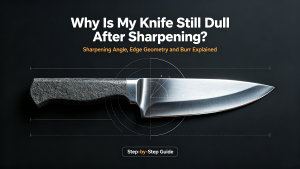
Why Is My Knife Still Dull After Sharpening?
You spent time sharpening your knife, expecting it to slice through vegetables, meat, and ingredients effortlessly — but the blade still feels disappointing. It cuts better for a few minutes, then quickly becomes dull again.
So, what went wrong?
A sharp knife is not simply a knife with a polished edge. The real secret lies in edge geometry, sharpening angle, grinding consistency, and finishing quality. Many people sharpen their knives repeatedly but never solve the actual problem.
Here are the most common hidden reasons why your knife is still dull after sharpening.
1. You Sharpened the Edge, But Not the Actual Blade Geometry
Many people think sharpening means removing metal until the knife becomes sharp. However, sharpening is actually the process of rebuilding the blade edge.
A knife edge has a specific shape:
Too thick behind the edge → the knife struggles to cut
Uneven bevel → cutting performance becomes unstable
Rounded edge → the blade feels dull even after sharpening
Imagine a car with powerful horsepower but underinflated tires. The power exists, but performance is limited.
The same applies to knives. A properly sharpened edge needs the correct structure to perform.
2. The Sharpening Angle May Be Wrong
One of the biggest reasons knives remain dull is using the wrong sharpening angle.
If the angle is too large:
The edge becomes thick
Cutting requires more force
The knife feels blunt
If the angle is inconsistent:
Some areas become sharp
Other areas remain dull
This is why maintaining a stable angle is often more important than simply sharpening longer.
3. You Only Used a Fine Sharpening Stage
A common mistake is starting and finishing with a fine sharpening surface.Fine grit is designed for:✓ Edge polishing✓ Final refinement✓ Smoother cutting performanceBut it cannot efficiently repair a damaged or very dull blade.A professional sharpening process usually includes:Coarse Grinding:Removes damaged metal and rebuilds the edge.Fine Grinding:Smooths and refines the blade for a cleaner cut.
Using a dual-stage sharpening system helps create a sharper and longer-lasting edge.
4. The Blade Has a “Burr” Problem
After sharpening, a tiny metal wire called a burr may remain on the edge.A burr means the metal has been pushed to one side during grinding.Some people mistake the burr for sharpness because the knife initially feels extremely sharp.However, when the burr breaks away:
The edge becomes uneven
Cutting ability drops quickly
The knife feels dull again
A good sharpening process should remove the burr and create a clean, balanced edge.
5. Your Knife Steel Determines Sharpening Results
Not every knife responds the same way.Different materials have different characteristics:
Soft Stainless Steel
Easy to sharpen
Loses sharpness faster
Hard High-Carbon Steel
Holds an edge longer
Requires more precise sharpening
A sharpening method that works perfectly for one knife may not deliver the same results for another.Understanding your blade material helps you choose the correct sharpening approach.
6. Excessive Pressure Damages the Edge
Many people press harder when the knife does not become sharp.However, more pressure does not mean better sharpening.Too much force can:
Remove excessive material
Create uneven edges
Damage the blade tip
A controlled sharpening process uses:✔ Stable pressure✔ Consistent movement✔ Correct sharpening speedThe goal is precision, not force.
7. Your Sharpening Tool May Not Provide Consistent Results
Traditional sharpening methods require skill and experience.A whetstone can create excellent results, but beginners often struggle with:
Maintaining the angle
Applying equal pressure
Sharpening both sides evenly
Modern electric knife sharpeners solve these problems by combining:
Fixed sharpening angles
Controlled grinding speed
Multi-stage sharpening systems
They help everyday users achieve more consistent results without professional experience.
How to Keep Your Knife Sharp Longer?
A sharp knife needs proper maintenance.Follow these simple habits:✔ Use the Right Cutting SurfaceAvoid glass, stone, or ceramic boards.✔ Clean and Dry ImmediatelyMoisture can affect some blade materials.✔ Store ProperlyUse a knife block, magnetic holder, or protective cover.✔ Sharpen Before It Becomes Completely DullRegular maintenance requires less material removal.
Choosing the Right Knife Sharpener MattersA quality knife sharpener should provide:1.Precise Sharpening Angle2.Keeps the blade edge consistent.3.Multiple Grinding Stages4.Allows both repair and finishing.5.Stable Motor Performance6.Maintains consistent sharpening speed.7.Safe Operation8.Protects users from incorrect sharpening techniques.A professional electric knife sharpener with dual grit wheels can make sharpening easier by combining power, precision, and convenience in one device.
Final Thoughts: A Sharp Knife Is About Precision, Not Just Grinding
If your knife is still dull after sharpening, the problem is usually not the knife itself. The real issue is often the sharpening process.
A truly sharp blade requires:
The correct angle + proper grinding stages + consistent sharpening control.
Once these factors work together, your knife can transform from frustratingly dull into a smooth, efficient cutting tool.
Achieving all three manually takes plenty of practice. Our electric knife sharpener is engineered to solve these pain‑points for home users. It locks in fixed sharpening angles, integrates dual‑grit grinding wheels for coarse repair and fine finishing, and delivers stable motor speed for repeatable sharpening results. No special skill needed to get a clean, long‑lasting edge.
Once these factors work together, your knife can transform from frustratingly dull into a smooth, efficient cutting tool. [...]
Read more...
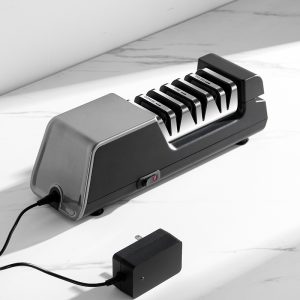
If you’ve ever sharpened a knife—or tried to—you’ve probably heard numbers like 15°, 20°, or 25° thrown around. These numbers aren’t just random. They are the edge angle, and they directly affect how sharp your knife is, how long it stays sharp, and how it performs in the kitchen.
So, what is the best angle to sharpen a knife? The answer depends on the type of knife, the steel, and how you use it. Let’s break it down.
Understanding Sharpening Angles
The sharpening angle is the angle between the two sides of the blade that meet at the very edge.A smaller angle creates a sharper edge but is more delicate. A larger angle creates a stronger edge but is less sharp.
Tips for Maintaining the Right Angle
Use a guided sharpener to maintain a consistent angle every time.
Let the sharpener do the work—too much pressure can ruin the angle.
Sharpen regularly to keep the edge aligned and performing at its best.
Always match the sharpening angle to your knife’s purpose.
💡 Pro Tip
Consistency is more important than the angle itself.A steady 20° angle every time will give you better results than an inconsistent 15°.No matter which angle you choose, regular sharpening will extend the life of your knives and improve your cooking experience.
Achieving these precise sharpening angles by hand can be tricky.Our electric knife sharpener helps you easily lock in the correct angle for different knives, getting consistent, professional‑quality edges every time.
FAQ
Q1: Can this sharpener handle Japanese 15°‑angle knives?A: Yes. It supports 15° per‑side sharpening setting, perfect for hard‑steel Japanese Gyuto and Santoku knives.
Q2: Do I need to adjust angles manually?A: No. Built‑in angle guides hold the correct position for you, avoiding inconsistent angles caused by hand shaking.
Q3: Can I sharpen serrated bread knives?A: Serrated blades need special treatment. Our sharpener is best for straight‑edge knives; we do not recommend it for serrated blades.
Q4: How often should I sharpen my kitchen knives?A: For daily home use, sharpen every 2‑4 weeks. Regular light sharpening keeps your edge at the correct angle and extends knife life.
Q5: Will too‑much pressure damage my knife edge?A: Yes. Just let the sharpener do the work. Light, steady pulling is enough, heavy pressure will ruin your sharpening angle. [...]
Read more...
Introduction
Many home cooks run into the same frustrating problem: dull kitchen knives. A blunt knife makes chopping slower, slips more easily, and creates messy cuts. When it comes to restoring sharp edges, two popular solutions stand out: the electric knife sharpener and the traditional whetstone (water stone).
Online content often oversimplifies this debate. Some claim whetstones always deliver superior edges, while others argue electric sharpeners make whetstones completely obsolete. The truth is, neither tool is universally “better”. Your cooking habits, skill level, time budget, knife collection and tolerance for learning curves will decide which fits you best.
This comparison skips generic marketing talking points. We look at real‑world kitchen performance, long‑term wear on blades, learning difficulty, maintenance and realistic scenarios for home users.
What Is an Electric Knife Sharpener, and How Does It Work?
An electric knife sharpener is a powered benchtop tool built with rotating abrasive grinding wheels or diamond sharpening slots. Most consumer‑grade models offer multi‑stage slots: coarse grinding for severely dull or damaged edges, fine sharpening, and finishing honing stages.
You simply pull the knife blade through designated slots at a steady pace. The motor‑driven abrasives remove metal from the blade to recreate a sharp cutting angle automatically.
Key trait: The machine controls sharpening angle for you. You do not need to manually hold a precise blade angle.
What Is a Whetstone, and How Does It Work?
A whetstone, also known as a water stone, is a rectangular block of abrasive material. Whetstones come in different grit ratings: low grit for repairing nicks and heavy reshaping, high grit for fine polishing the cutting edge.
Before use, you soak the stone in water. You then slide the knife blade across the stone’s surface by hand. You must manually maintain a consistent sharpening angle the entire time you work both sides of the edge.
Whetstones produce sharp edges, but output quality directly depends on your technique. Poor angle control leads to inconsistent edges, bent edges or wasted metal removal.
Head‑to‑Head Real‑World Comparison
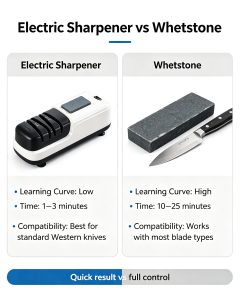
1. Learning Curve & Time Investment
Electric Knife Sharpener
Very low learning barrier. New users can get usable sharpness in 1‑3 minutes per knife.
The built‑in slot geometry locks sharpening angle. Minimal practice required.
Drawback: You still need to follow correct pulling speed; rushing can create uneven edges.
Whetstone
Steep learning curve. Mastering consistent hand angle takes hours of practice.
Sharpening one kitchen knife can take 10‑25 minutes, even for experienced users.
If your angle drifts, you will get uneven cutting edges no matter how good your stone is.
Real‑world insight: Most casual home cooks never fully master whetstone angle control. Many hobbyists spend months practicing before they get reliable repeatable results.
2. Edge Quality & Blade Metal Removal
Electric Knife Sharpener
Modern high‑quality electric sharpeners create clean, service‑ready edges for everyday kitchen tasks.
Multi‑stage diamond‑based models can handle dull, nicked blades.
Cons: Cheap low‑end electric sharpeners remove excessive metal fast, wearing down your knife over time. Poor‑quality wheels can leave coarse scratch patterns on the bevel. Premium units minimize over‑grinding.
Whetstone
With proper technique, whetstones yield extremely polished, refined edges favoured by cooking enthusiasts.
You get full manual control over how much metal you remove. You can do light honing or heavy damage repair.
Cons: Bad technique can grind away more blade material than a decent electric sharpener. Angle wobble creates micro‑burrs that feel sharp but dull quickly during food prep.
3. Compatibility With Different Knives
Electric Knife Sharpener ✅ Works great for standard Western kitchen chef knives, utility knives, paring knives. ⚠️ Limitations: Many consumer electric sharpeners are fixed‑angle. They struggle with Japanese‑style thin‑angle blades, very thin custom knives or serrated knives (only specific models support serration sharpening). Some wide‑bolster knives cannot fully seat into sharpening slots.
Whetstone ✅ Extremely flexible. Works for Western knives, thin‑bevel Japanese knives, custom blades, pocket knives. You adjust your hand angle for each knife. ⚠️ Limitation: Serrated knives are tricky to sharpen on a flat whetstone without extra accessories.
4. Maintenance & Upkeep
Electric Knife Sharpener
After‑use cleaning is required: you must empty metal shaving debris tray, clean grinding slots with a stiff brush to avoid metal dust buildup.
Diamond‑abrasion sharpening heads wear slowly; heads will need replacement after heavy‑duty long‑term use.
Keep unit dry; moisture inside causes motor failure or rust.
Whetstone
Must soak before each sharpening session.
The stone surface will develop uneven hollows over repeated use and needs periodic flattening with a lapping plate.
After use, rinse and air‑dry slowly. Improper drying causes cracking.
You need extra accessories: flattening stone, soaking container, optional angle guide.
5. Cost: Upfront & Long‑Term
Electric Knife Sharpener
Entry‑level cheap units carry risk of over‑grinding blades. Reliable household‑grade electric sharpeners sit in the mid‑price bracket.
Long‑term cost: replacement sharpening cartridges when abrasives wear out.
Whetstone
You can buy affordable dual‑grit whetstones. Premium high‑quality stones are expensive.
Extra ongoing costs: flattening plate, angle guides. A cheap poor‑quality whetstone wears unevenly and degrades quickly.
When Should You Choose an Electric Knife Sharpener?
Pick an electric knife sharpener if these match your situation:
You want sharp knives fast, without spending hours practicing sharpening technique.
You own mostly standard Western‑style kitchen knives.
Multiple family members use knives; you want a foolproof tool anyone can safely operate.
You do not want to invest time learning hand‑sharpening skills.
You frequently rescue heavily dull, abused kitchen knives.
Tip: Always invest in a well‑reviewed mid‑range electric sharpener. Ultra‑cheap models will ruin good knives by aggressive over‑grinding.
When Should You Choose a Whetstone?
Choose a whetstone if these apply to you:
You collect high‑end Japanese or custom knives with special sharpening angles.
You enjoy knife‑maintenance as a hobby and are willing to invest time learning proper technique.
You want maximum manual control over every aspect of your knife’s cutting edge.
You sharpen many different unusual blade types beyond standard chef knives.
Important note: A whetstone does not automatically equal better results. A poorly‑executed whetstone sharpen yields worse performance than a decent electric sharpener used correctly.
Common Myths Debunked
Myth 1: Whetstones always produce sharper knives than electric sharpeners
Fact: Edge quality depends on operator skill. A skilled whetstone user gets excellent results. An untrained beginner on a whetstone often produces inconsistent edges. A quality modern electric sharpener delivers reliable sharpness for daily cooking.
Myth 2: Electric sharpeners destroy your knives
Fact: Only low‑cost poor‑quality electric sharpeners remove excessive metal. Premium diamond‑based electric sharpeners remove material conservatively, comparable to whetstone work. Misusing a whetstone can also wear down blades quickly.
Myth 3: Whetstones are the “professional only” choice
Fact: Many professional kitchen environments use electric sharpening equipment for high‑volume knife turnover. Whetstones are widely used by hobbyists and specialist chefs. Both tools exist in professional settings.
Final Verdict: Which One Is Better for You?
There is no universal winner.
For most regular home kitchens: a quality electric knife sharpener is the most practical solution. It delivers consistent sharpness quickly, with minimal learning work. It fits busy households that just want working sharp knives for food preparation.
For knife enthusiasts and owners of premium specialty blades: a whetstone is worth the learning investment, giving you full manual control over edge geometry.
Many users combine both tools. Use an electric sharpener for fast restoration of dull household knives, and use a whetstone for fine‑tuning your premium collection.
If you are ready to try an electric sharpener, our household‑grade model balances performance and ease‑of‑use for regular home cooking. It supports coarse repair and fine polishing, with handy built‑in honing stone.
FAQ
Can I use both an electric sharpener and a whetstone?
Absolutely. A common workflow: use electric sharpener for major edge repair, then finish with high‑grit whetstone polishing if you want an ultra‑refined edge.
Will an electric sharpener ruin my Japanese knife?
Most standard consumer electric sharpeners use fixed Western angles. They can alter the original thin factory bevel of Japanese knives. Look for angle‑adjustable electric sharpener models if you plan to sharpen Japanese‑style blades.
How often should I sharpen my kitchen knives?
Frequency depends on cutting surface and usage. For average home cooking: most knives need refreshing every 2‑4 months, depending on how heavily you use them. [...]
Read more...

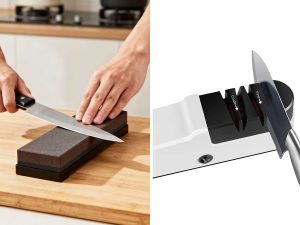
In our pursuit of kitchen perfection, we invest in cast iron pans, professional stoves, and spices from around the world. Yet we often overlook the most fundamental tool of all: a truly sharp knife.
But sharpness isn’t permanent. It’s a reward that requires care. Here’s how a modern electric knife sharpener can preserve that sharpness and become your kitchen’s most reliable partner.
The True Cost of Dull Knives
A dull knife does more than make slicing tomatoes messy – it costs you in invisible ways:
False Security: Seemingly safer? Actually, dull blades require more pressure and slip easily, creating real danger.
Lost Flavors: Dull knives tear meat fibers and crush tomatoes, wasting precious juices and compromising flavor before cooking even begins.
Lost Joy: Cooking should be creative and therapeutic. A dull knife constantly reminds you of your tools’ limitations, draining your culinary inspiration.
https://youtube.com/shorts/64d2rp-aB_w
Beyond the Whetstone: The Era of Precision Convenience
While traditional sharpening stones have their place, they demand skill, time and focus – luxuries in modern life. We don’t need another complicated ritual; we need a reliable solution.
This is where the electric knife sharpener shines. It doesn’t replace skill – it preserves it. By building professional sharpening angles into a simple design, it makes knife maintenance as easy as brewing coffee. This represents a shift in philosophy: let tools handle complexity, while we enjoy simplicity.
Finding Your Kitchen Partner: What Makes the Best Electric Knife Sharpener?
When searching for the best electric knife sharpener, what truly matters? Not technical specs, but the promise of an elevated experience.
Look for these qualities:
Intelligence Over Complexity: It should automatically adapt to different blade types without manual adjustments.
Respectful Sharpening: The best sharpeners carefully hone edges without aggressively grinding blades away.
Quiet Operation: Its work should be heard as a low, efficient hum – never disrupting kitchen peace.
Lasting Build: Made from durable materials, it should become a permanent, silent member of your kitchen crew.
A true kitchen partner isn’t noticed for its appearance, but for its reliable performance when needed – letting you focus completely on creation.
Conclusion: Reclaim Control of Your Cutting Experience
Ultimately, investing in a quality electric knife sharpener isn’t just buying a product. It’s respecting your culinary craft, honoring quality ingredients, and reclaiming fluidity and joy in your daily cooking.
It returns absolute control over your cutting. When every slice comes with that clean, crisp sound, you’ll feel unprecedented mastery – not just over your tools, but over the entire cooking process.
May every cut be precise and confident [...]
Read more...
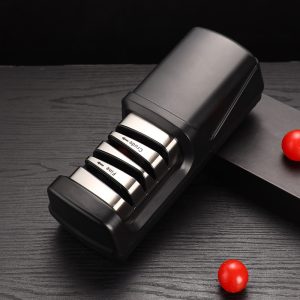
How To Keep Your Tool Sharp & Durable
Investing in the best electric knife sharpener or a reliable electric kitchen knife sharpener saves kitchen time—but only with proper care. A well-maintained electric knife sharpener keeps blades sharp for years; neglect causes jams, uneven results, or motor failure. Below are concise, unique maintenance tips.
1. Post-Use Cleanup: Do This Every Time (5-Minute Rule)
Metal shavings clog slots and scratch parts. Clean after every use:
Empty debris tray: Tap the removable base tray over trash to remove shavings (don’t blow—avoid eye irritation).
Clean grinding slots: Scrub slots with a stiff brush (old toothbrush works). Avoid water—moisture turns dust into gritty paste.
Wipe exterior: Use a microfiber cloth; spot-clean sticky residue with soapy water, then dry immediately to prevent rust.
2. Sharpening Head Care: Extend the “Sharpening Power”
Grinding heads (diamond/ceramic/abrasive steel) are critical to your electric knife sharpener. Care for them to avoid frequent replacements:
Monthly wear check: Inspect heads via the bottom panel. Replace if you see deep grooves, chipping, or smooth (grit-free) surfaces.
Avoid overloading: Fix large nicks/rust with a manual file first—these damage heads. Use the sharpener for finishing.
Skip lubricants: Unlike manual whetstones, heads don’t need oil—lubricants attract dust and clog parts.
3. Motor & Power: Protect the “Engine”
The motor is the priciest component—prevent burnout with simple habits:
2-minute cool-down: Sharpen max 5 knives in a row. Turn off and cool after 2 minutes of use—overheating shortens life.
Quarterly cord check: Stop use if cords fray/crack—replace or contact the manufacturer for repairs.
Use proper power: Plug into a standard outlet—avoid extension cords (they cause voltage drops that stress the motor).
4. Storage: Keep It Dry & Ready
Poor storage ruins even the best electric knife sharpener quickly:
Choose dry storage: Use a cabinet (not under the sink) or countertop away from dishwashers—moisture causes rust/mold.
Cover (optional): A dust cover/towel keeps debris out of sharpening slots.
Don’t stack items: Heavy objects bend slot guides, leading to uneven edges.
Quick Fix for Common Issues
Won’t turn on: Ensure the debris tray is fully closed (most have a safety switch).
Blades still dull: Clean grinding slots—clogged shavings are the main cause.
Monthly maintenance takes under 10 minutes but doubles your electric knife sharpener’s lifespan. A little care for your tool goes a long way. [...]
Read more...
-1-300x300.jpg)
If you’ve ever hesitated to use an electric knife sharpener because you’ve heard they can ruin your knives, you’re not alone. It’s the most common concern we hear.
But here’s the truth that manufacturers don’t always emphasize: An electric knife sharpener is perfectly safe for most kitchen knives, but only when used correctly. The line between a razor-sharp edge and a damaged blade comes down to one thing: technique.
This guide isn’t just another set of instructions. It’s your pathway to understanding the why behind the how, ensuring you never have to ask “am I damaging my knives?” again.
The Golden Rule: Guide, Don’t Press
Forget everything you think you know about force and friction. The fundamental principle of using any modern electric sharpener is this: You are a guide, not a crusher.
These machines are engineered with precision angles and guides. Your only job is to let the machine do the work. Pressing down too hard is the number one cause of premature wear, excessive metal removal, and a damaged blade.
Think of it like this: You’re gently leading a friend by the hand, not pushing them through a crowd.
The Safe & Correct 4-Step Sharpening Process
Follow these steps precisely to transform your dull blades safely and effectively.
Step 1: Safety & Setup (The Foundation)
Secure the Base: Place your sharpener on a dry, stable, and flat countertop. A slipping sharpener is a dangerous one.
Clean the Blade: Wipe your knife clean of any food residue or moisture. A dirty blade can clog the grinding wheels and lead to an uneven edge.
Step 2: Understand Your Slots (Choose Wisely)Most sharpeners have 2 or 3 stages. Using the wrong one is a common mistake.
Coarse Slot (Stage 1 – The Repairman): Use this only for knives that are very dull, have nicks, or are new to electric sharpening. For routine maintenance, you can skip this slot entirely.
Fine Slot (Stage 2 – The Refiner): This is your go-to slot for 90% of sharpening sessions. It hones the edge to a sharp, polished finish.
Honing Slot (Stage 3 – The Polisher – if available): This doesn’t remove metal. It realigns and polishes the edge for a lasting, razor-sharp finish. Use it every few sharpening sessions.
Step 3: Execute the Perfect Pull-Through (The Core Technique)This is where the magic happens. Do NOT rush.
Place the heel of the blade (near the handle) firmly into the guide slot.
With light, consistent pressure, pull the knife straight through the slot from heel to tip in a smooth, steady motion. Imagine you’re pulling a knife through a block of soft butter.
Let the motor’s sound be your guide—it should sound smooth and consistent, not strained.
Repeat on the other side if your model requires alternating sides.
The Magic Number: For the coarse slot, 3-5 pulls per side is maximum. For the fine slot, 5-7 pulls are almost always sufficient. More is not better!
Step 4: The Crucial Clean-UpAfter sharpening, microscopic metal particles (swarf) will be inside your sharpener. Use the provided brush or a dry toothbrush to clean them out. This ensures peak performance for years to come.
Expert Q&A: Your “Damage Control” Questions Answered
Q: I’m still worried about damaging my knives. What’s the biggest mistake to avoid?A: Without a doubt, excessive pressure and over-sharpening. If your blade is sharp after 5 pulls, stop. There’s no prize for 10 more. This is the simplest way to guarantee blade longevity.
Q: Which knives should I NEVER put in an electric sharpener?A:
Serrated Knives: The grinding wheels cannot fit into the serrations and will destroy the knife’s edge.
Ceramic Knives: They are harder than the sharpener’s abrasive wheels and will damage the machine.
Hollow-Ground Knives & Fillet Knives: Their thin, flexible blades are not suited for the rigid guides of most electric sharpeners.
Q: How often should I actually use my electric sharpener?A: For regular home cooks, using the FINE slot only for 2-3 pulls per side every 2-3 weeks is perfect for maintenance. You only need the coarse slot if the fine slot no longer restores the edge.
Conclusion: Confidence at Your Fingertips
The narrative that electric knife sharpeners are inherently damaging is a myth born from improper use. When you embrace the “Guide, Don’t Press” philosophy and follow this safe, step-by-step process, you are not just sharpening a tool—you are investing in a better, safer, and more enjoyable cooking experience.
Your sharpener is a partner in your kitchen, not a threat to it. Use it with knowledge and confidence, and you’ll be rewarded with perfectly sharp blades, year after year.
If you are looking for reliable electric knife sharpener for your kitchen, check out our OEM‑supported sharpening devices. We could provide custom logo and packaging service for your requests. [...]
Read more...