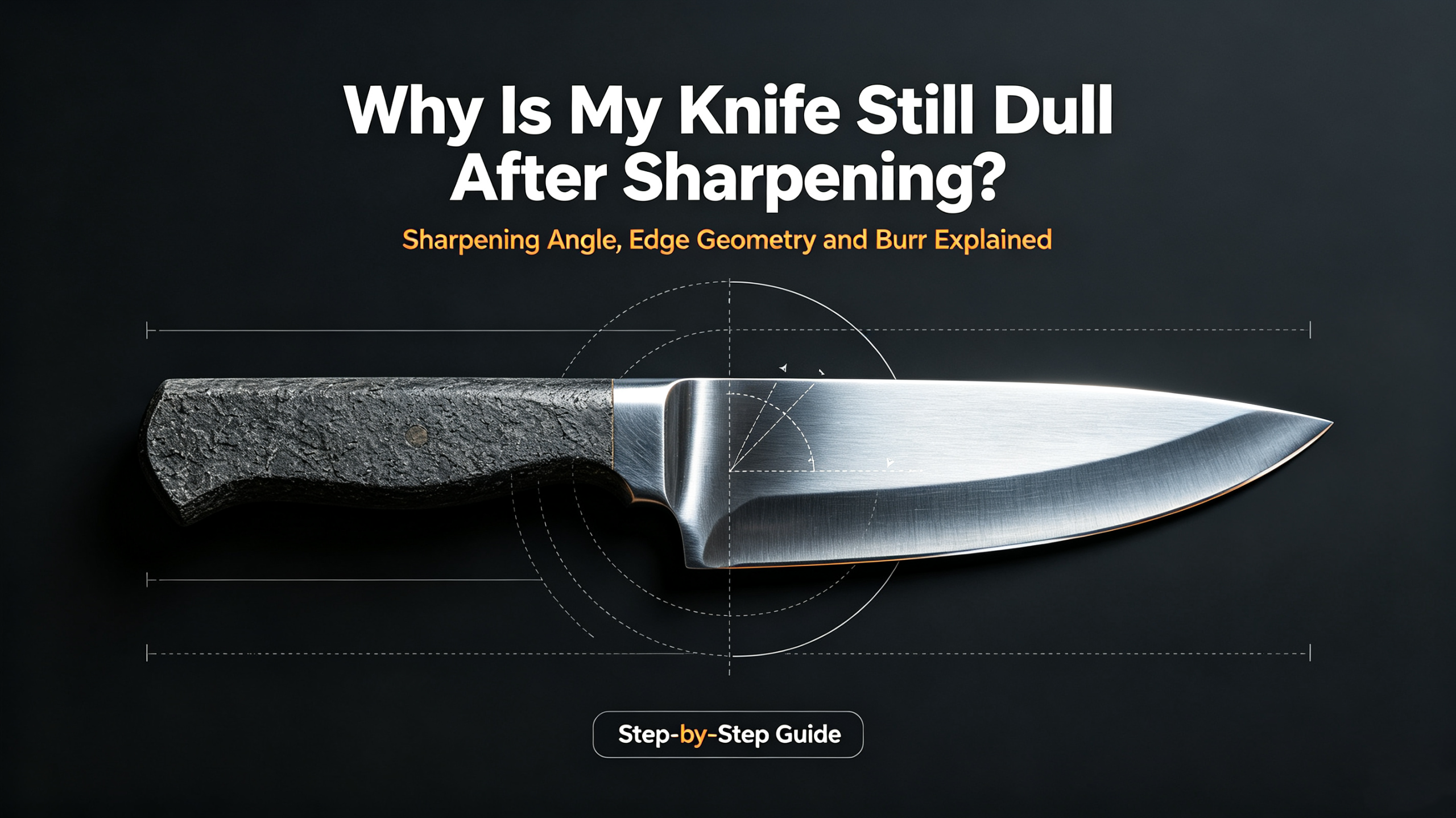
Why Is My Knife Still Dull After Sharpening? The Hidden Reasons Your Blade Doesn’t Stay Sharp
Why Is My Knife Still Dull After Sharpening?
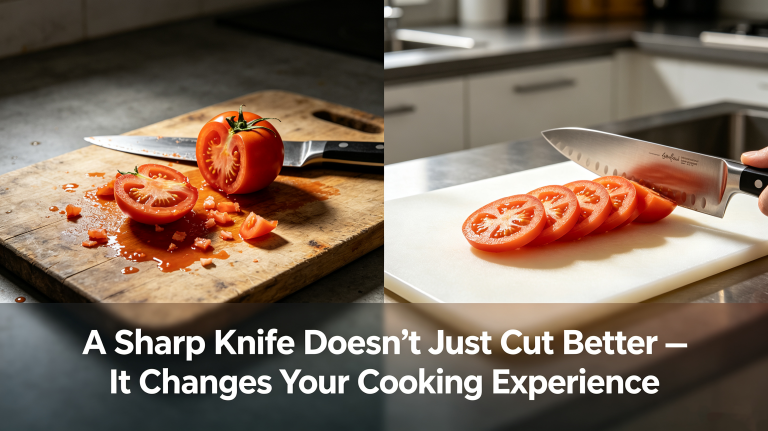
You spent time sharpening your knife, expecting it to slice through vegetables, meat, and ingredients effortlessly — but the blade still feels disappointing. It cuts better for a few minutes, then quickly becomes dull again.
So, what went wrong?
A sharp knife is not simply a knife with a polished edge. The real secret lies in edge geometry, sharpening angle, grinding consistency, and finishing quality. Many people sharpen their knives repeatedly but never solve the actual problem.
Here are the most common hidden reasons why your knife is still dull after sharpening.
1. You Sharpened the Edge, But Not the Actual Blade Geometry
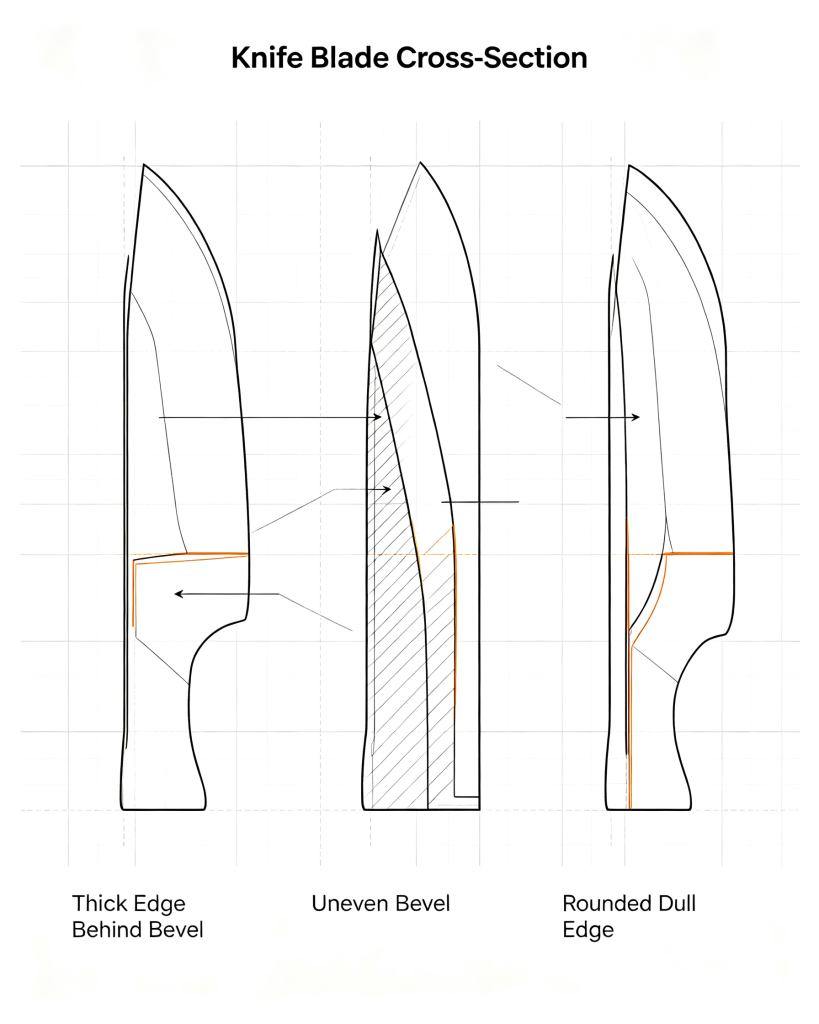
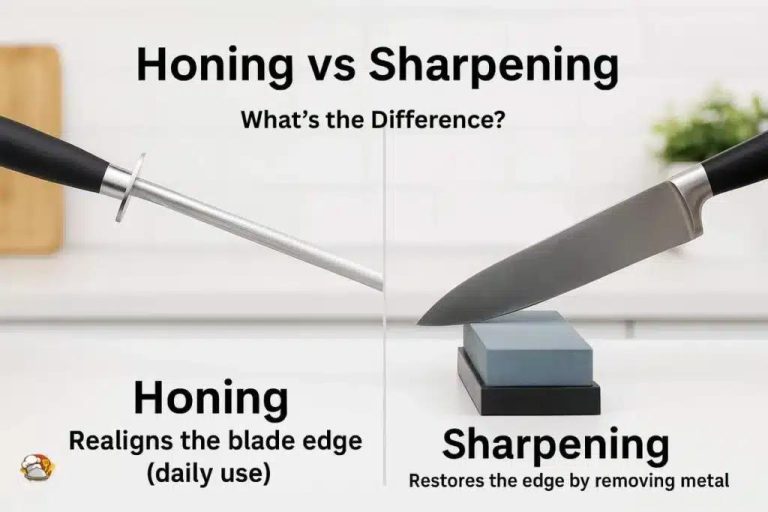
Many people think sharpening means removing metal until the knife becomes sharp. However, sharpening is actually the process of rebuilding the blade edge.
A knife edge has a specific shape:
- Too thick behind the edge → the knife struggles to cut
- Uneven bevel → cutting performance becomes unstable
- Rounded edge → the blade feels dull even after sharpening
Imagine a car with powerful horsepower but underinflated tires. The power exists, but performance is limited.
The same applies to knives. A properly sharpened edge needs the correct structure to perform.
2. The Sharpening Angle May Be Wrong
One of the biggest reasons knives remain dull is using the wrong sharpening angle.
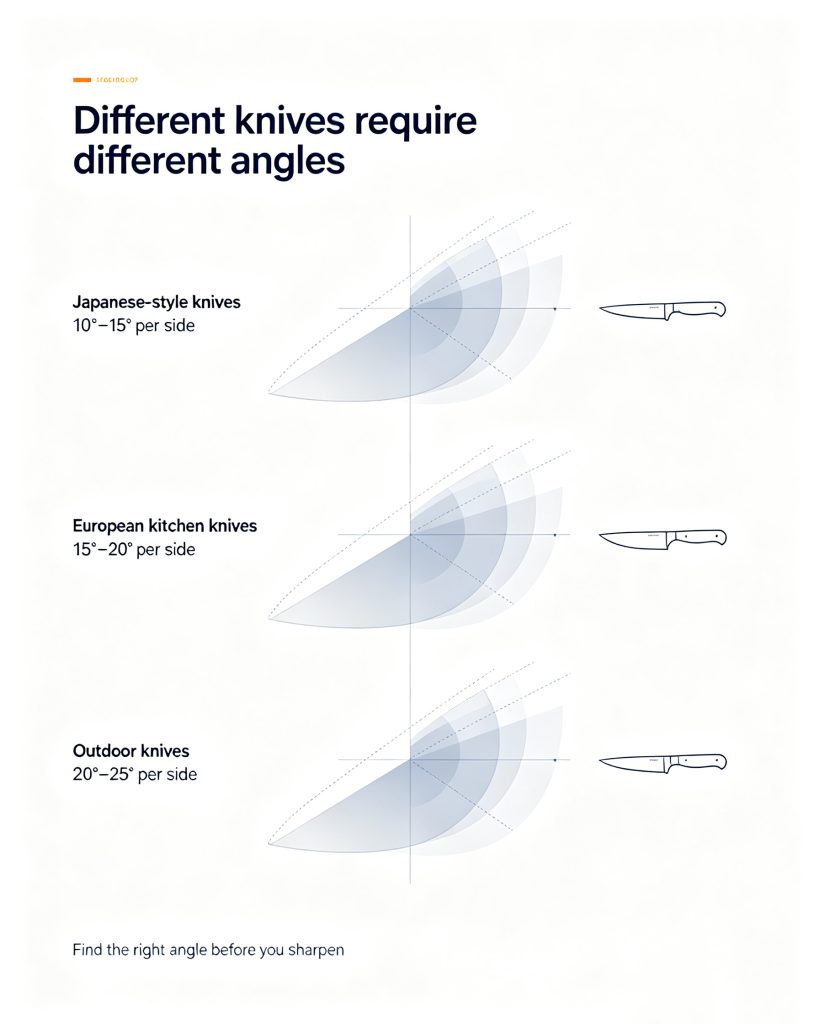
If the angle is too large:
- The edge becomes thick
- Cutting requires more force
- The knife feels blunt
If the angle is inconsistent:
- Some areas become sharp
- Other areas remain dull
This is why maintaining a stable angle is often more important than simply sharpening longer.
3. You Only Used a Fine Sharpening Stage
A common mistake is starting and finishing with a fine sharpening surface.
Fine grit is designed for:
✓ Edge polishing
✓ Final refinement
✓ Smoother cutting performance
But it cannot efficiently repair a damaged or very dull blade.
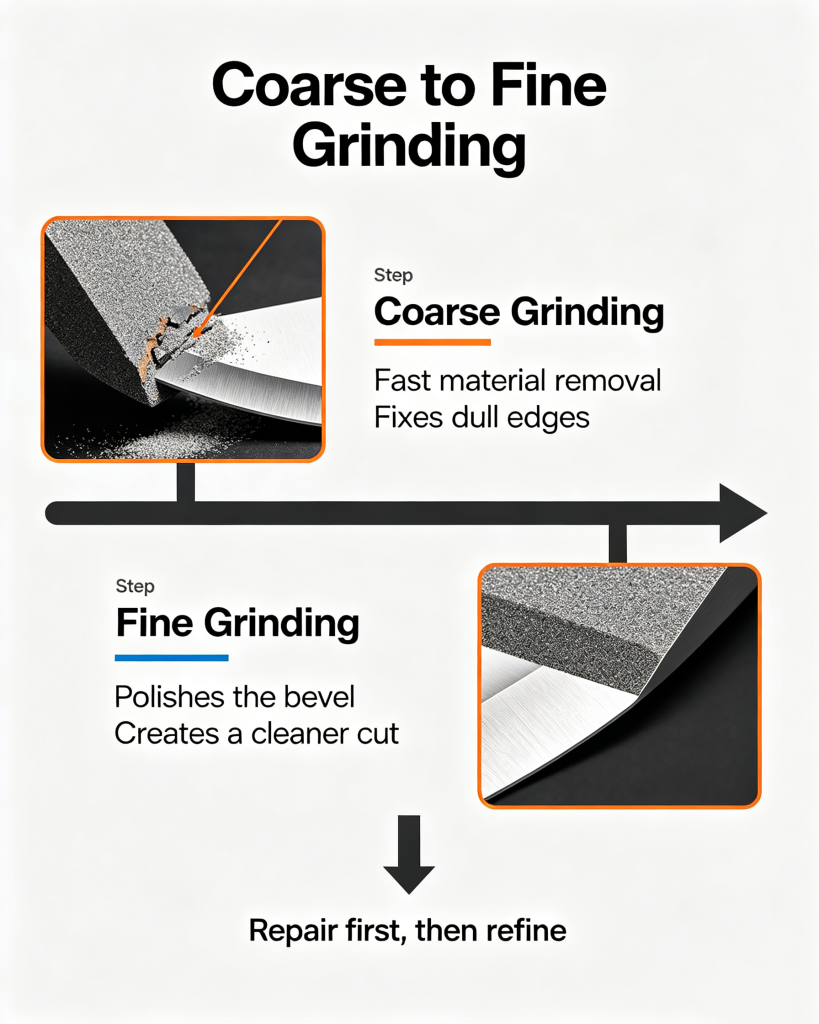
A professional sharpening process usually includes:
Coarse Grinding:Removes damaged metal and rebuilds the edge.
Fine Grinding:Smooths and refines the blade for a cleaner cut.
Using a dual-stage sharpening system helps create a sharper and longer-lasting edge.
4. The Blade Has a “Burr” Problem
After sharpening, a tiny metal wire called a burr may remain on the edge.A burr means the metal has been pushed to one side during grinding.Some people mistake the burr for sharpness because the knife initially feels extremely sharp.
However, when the burr breaks away:
- The edge becomes uneven
- Cutting ability drops quickly
- The knife feels dull again
A good sharpening process should remove the burr and create a clean, balanced edge.
5. Your Knife Steel Determines Sharpening Results
Not every knife responds the same way.
Different materials have different characteristics:
Soft Stainless Steel
- Easy to sharpen
- Loses sharpness faster
Hard High-Carbon Steel
- Holds an edge longer
- Requires more precise sharpening
A sharpening method that works perfectly for one knife may not deliver the same results for another.
Understanding your blade material helps you choose the correct sharpening approach.
6. Excessive Pressure Damages the Edge
Many people press harder when the knife does not become sharp.
However, more pressure does not mean better sharpening.Too much force can:
- Remove excessive material
- Create uneven edges
- Damage the blade tip
A controlled sharpening process uses:
✔ Stable pressure
✔ Consistent movement
✔ Correct sharpening speed
The goal is precision, not force.
7. Your Sharpening Tool May Not Provide Consistent Results
Traditional sharpening methods require skill and experience.
A whetstone can create excellent results, but beginners often struggle with:
- Maintaining the angle
- Applying equal pressure
- Sharpening both sides evenly
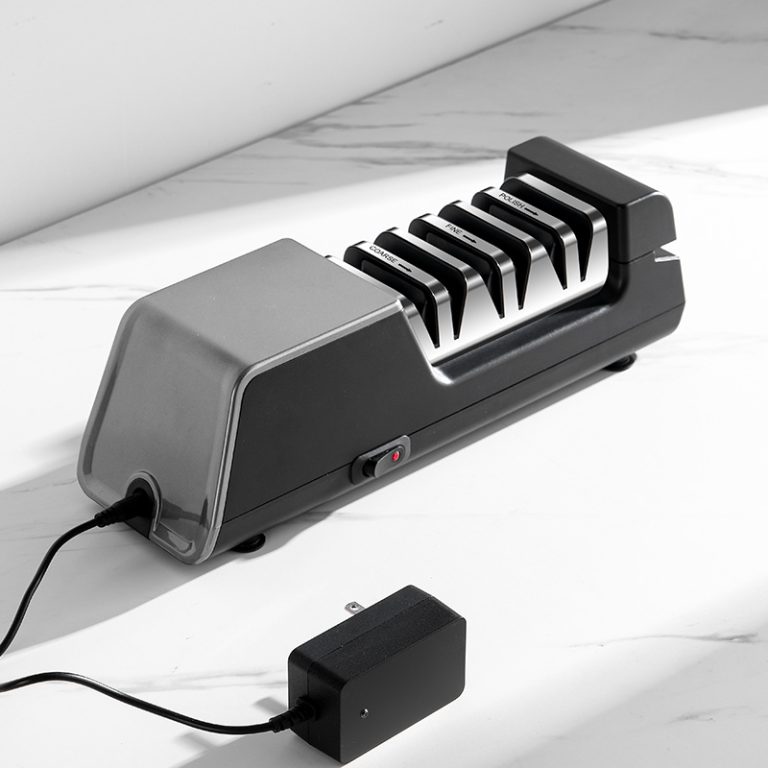
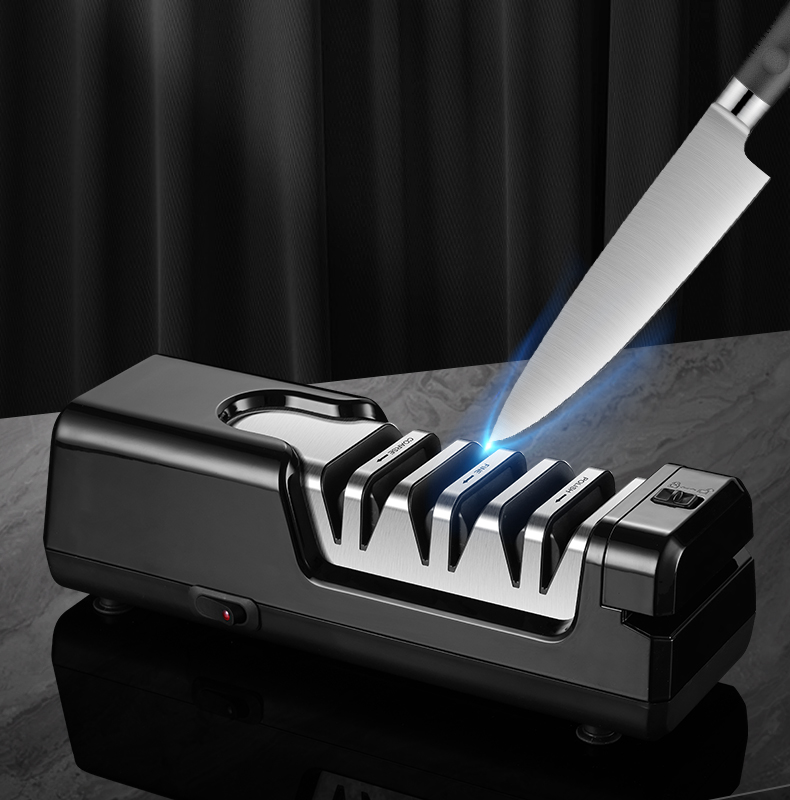
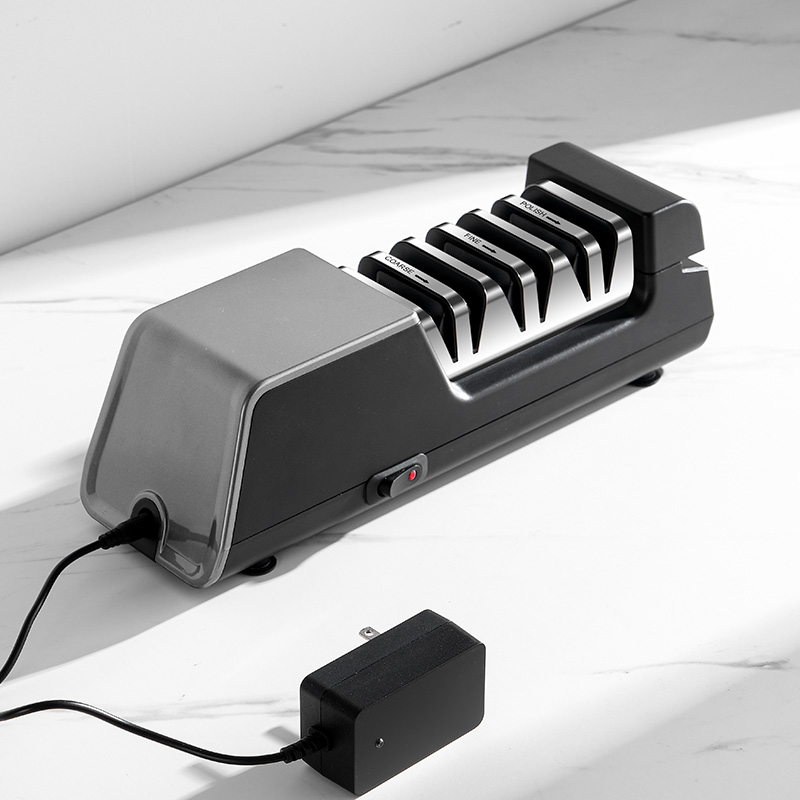
Modern electric knife sharpeners solve these problems by combining:
- Fixed sharpening angles
- Controlled grinding speed
- Multi-stage sharpening systems
They help everyday users achieve more consistent results without professional experience.
How to Keep Your Knife Sharp Longer?
A sharp knife needs proper maintenance.
Follow these simple habits:
✔ Use the Right Cutting Surface
Avoid glass, stone, or ceramic boards.
✔ Clean and Dry Immediately
Moisture can affect some blade materials.
✔ Store Properly
Use a knife block, magnetic holder, or protective cover.
✔ Sharpen Before It Becomes Completely Dull
Regular maintenance requires less material removal.
Choosing the Right Knife Sharpener Matters
A quality knife sharpener should provide:
1.Precise Sharpening Angle
2.Keeps the blade edge consistent.
3.Multiple Grinding Stages
4.Allows both repair and finishing.
5.Stable Motor Performance
6.Maintains consistent sharpening speed.
7.Safe Operation
8.Protects users from incorrect sharpening techniques.
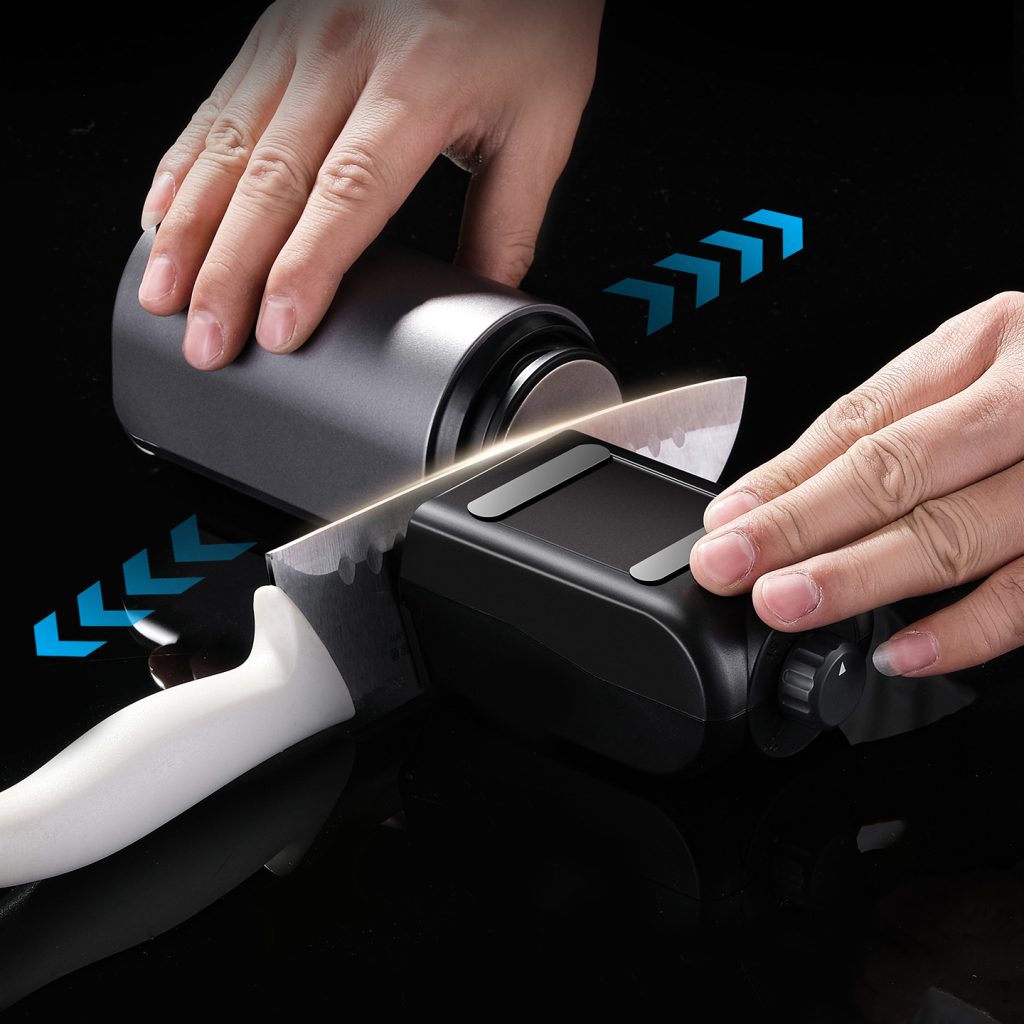
A professional electric knife sharpener with dual grit wheels can make sharpening easier by combining power, precision, and convenience in one device.
Final Thoughts: A Sharp Knife Is About Precision, Not Just Grinding
If your knife is still dull after sharpening, the problem is usually not the knife itself. The real issue is often the sharpening process.
A truly sharp blade requires:
The correct angle + proper grinding stages + consistent sharpening control.
Once these factors work together, your knife can transform from frustratingly dull into a smooth, efficient cutting tool.
Achieving all three manually takes plenty of practice. Our electric knife sharpener is engineered to solve these pain‑points for home users. It locks in fixed sharpening angles, integrates dual‑grit grinding wheels for coarse repair and fine finishing, and delivers stable motor speed for repeatable sharpening results. No special skill needed to get a clean, long‑lasting edge.
Once these factors work together, your knife can transform from frustratingly dull into a smooth, efficient cutting tool.
-1-768x768.jpg)