How to Choose the Best Electric Knife Sharpener
How to Choose the Best Electric Knife Sharpener: A Complete Buying Guide
A sharp knife is more than just a kitchen tool — it is the foundation of efficient and enjoyable cooking. However, even the highest-quality knives will gradually lose their edge after repeated use. A dull knife not only makes food preparation slower but can also increase the risk of slipping and accidental injuries.
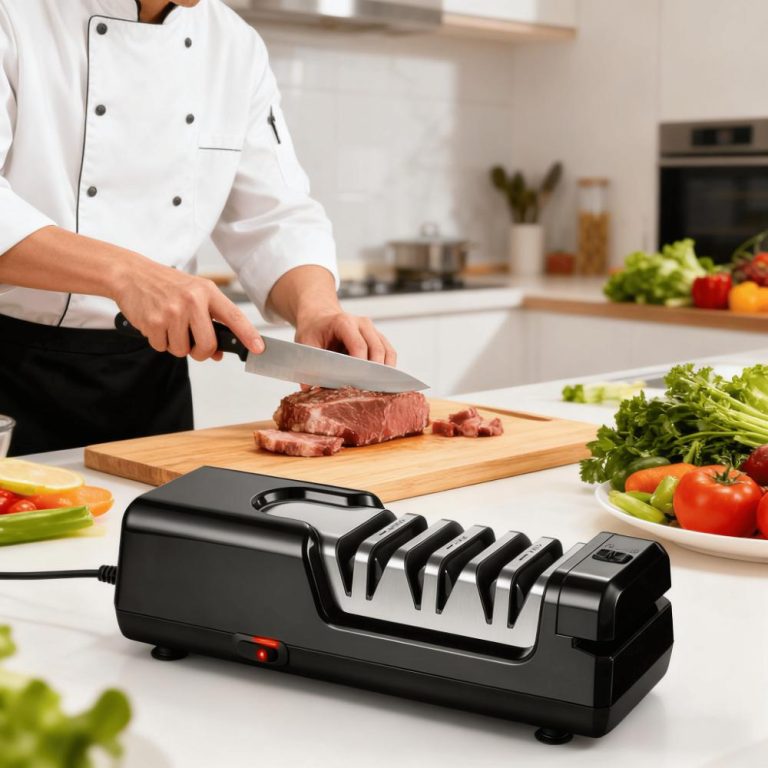
An electric knife sharpener offers a simple and effective solution by restoring the blade edge quickly and consistently. But with so many options available, how do you choose the best electric knife sharpener for your kitchen?
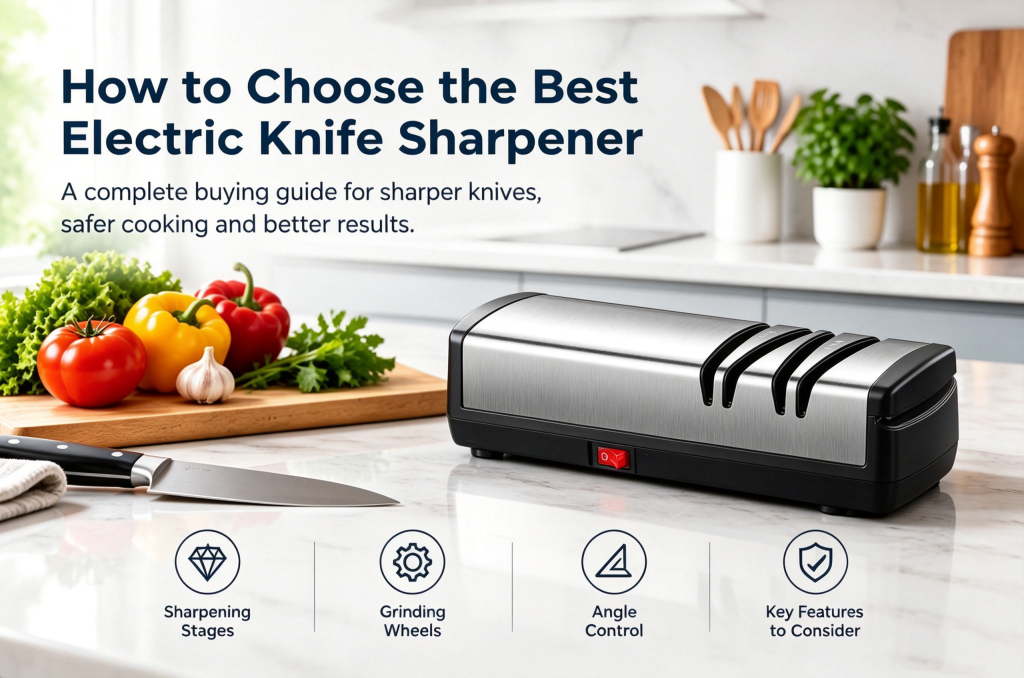
This guide will help you understand the key features, functions, and details you should consider before making a purchase.
1. Understand Your Knife Types Before Choosing a Sharpener
The first step in selecting an electric knife sharpener is knowing what types of knives you use most often.
Different knives require different sharpening methods:
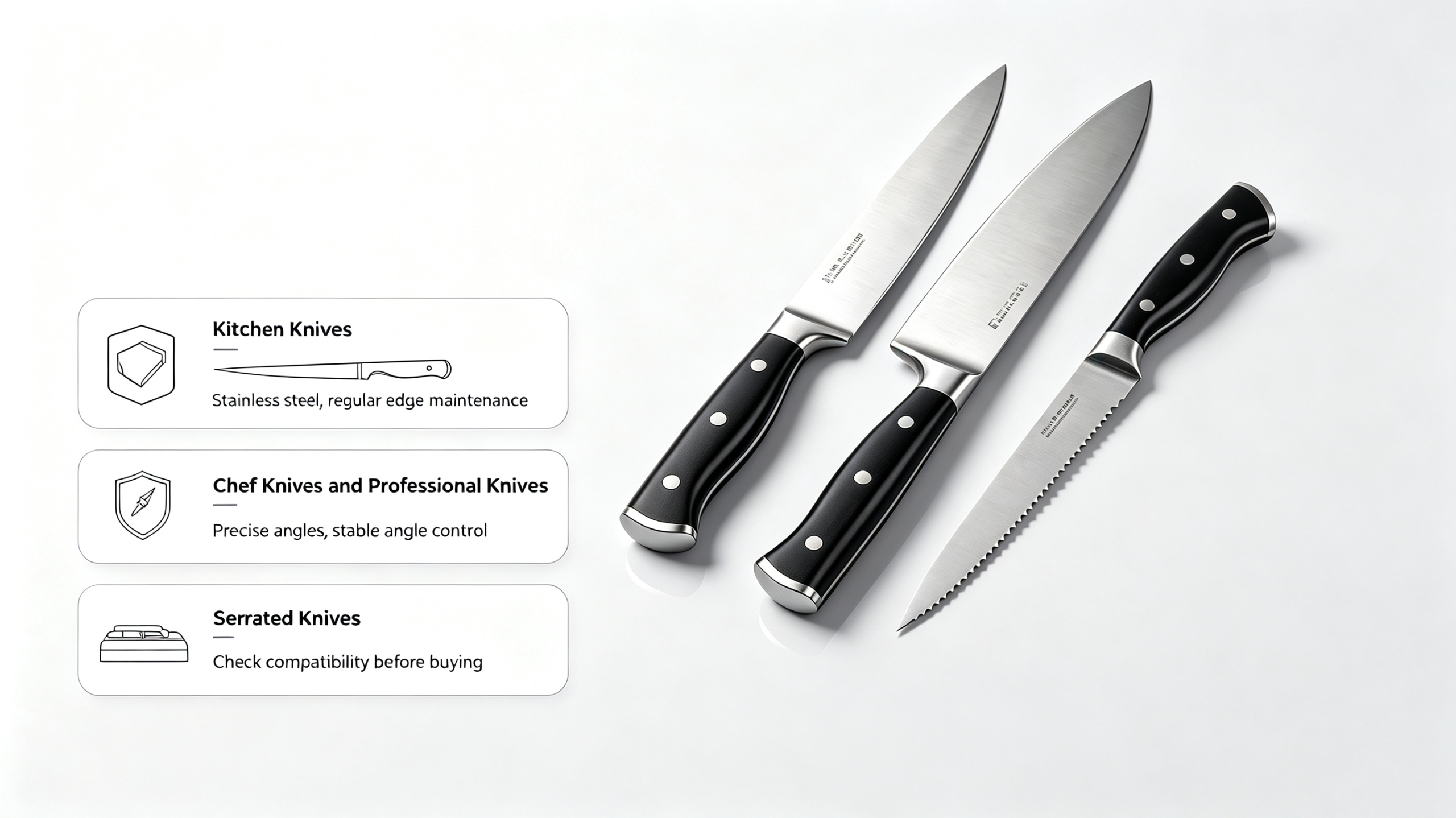
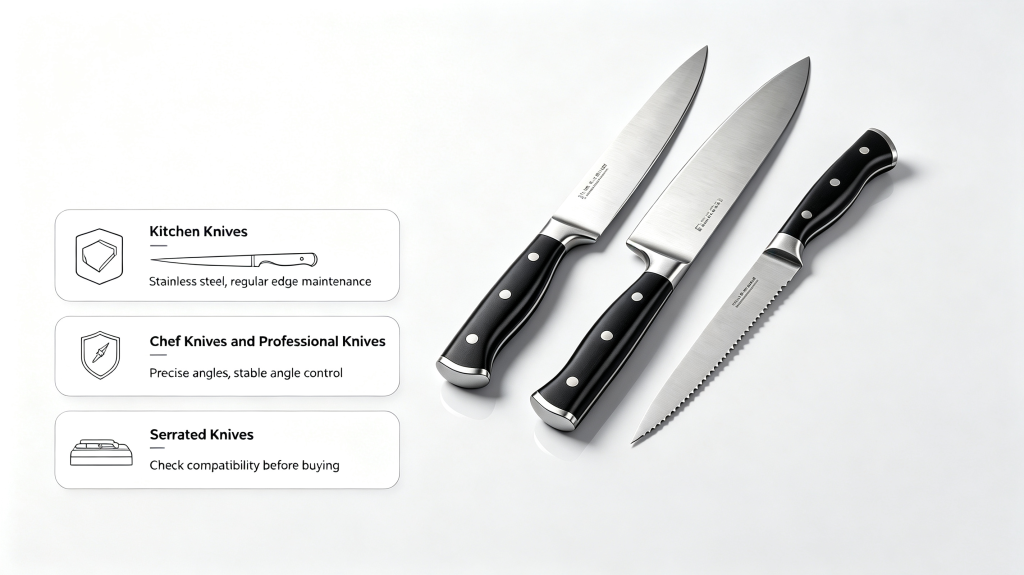
Kitchen Knives
Most household kitchen knives are made from stainless steel and require regular edge maintenance. A multi-stage electric sharpener is usually the best choice because it can handle sharpening, refining, and polishing.
Chef Knives and Professional Knives
Professional blades often require more precise sharpening angles. A quality sharpener should provide stable angle control to maintain the original blade geometry.
Serrated Knives
Some electric sharpeners are designed specifically for serrated blades, while others are mainly suitable for straight-edge knives. Always check compatibility before buying.
Tip: The best electric knife sharpener should be versatile enough to handle the knives you actually use every day.
2. Check the Sharpening Stages
One of the biggest differences between electric knife sharpeners is the number of sharpening stages.
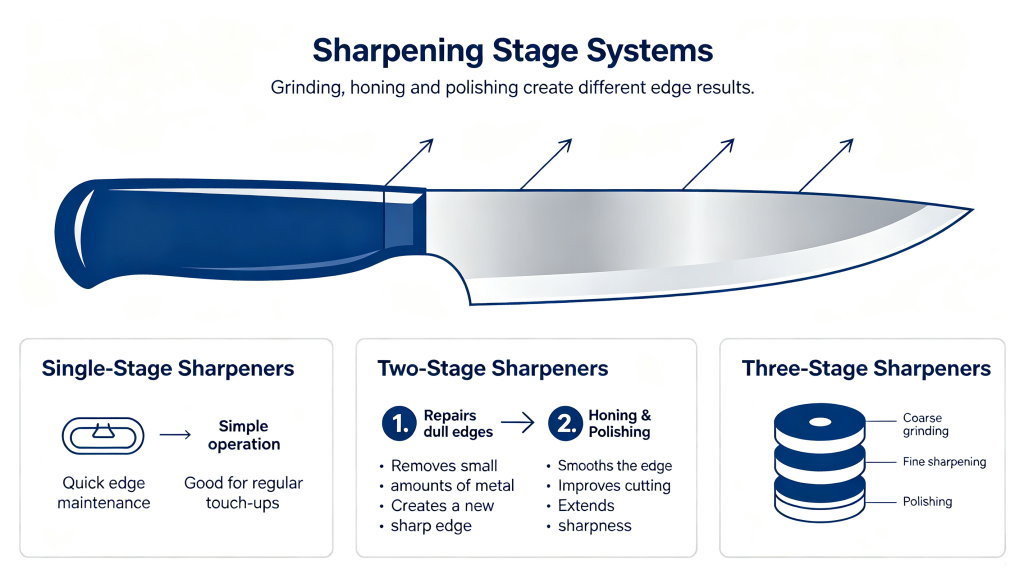
Single-Stage Sharpeners
Single-stage models are usually designed for quick edge maintenance. They are simple to operate but may not provide a professional-level finish.
Two-Stage Sharpeners
Two-stage systems are more common:
Stage 1: Grinding
- Repairs dull or damaged edges
- Removes small amounts of metal
- Creates a new sharp edge
Stage 2: Honing & Polishing
- Smooths the blade edge
- Improves cutting performance
- Extends the sharpness duration
Three-Stage Sharpeners
Advanced models may include:
- Coarse grinding
- Fine sharpening
- Polishing
These provide better results for users who want a sharper and more refined blade.
3. Pay Attention to Sharpening Angle Accuracy
The sharpening angle determines how the blade performs.
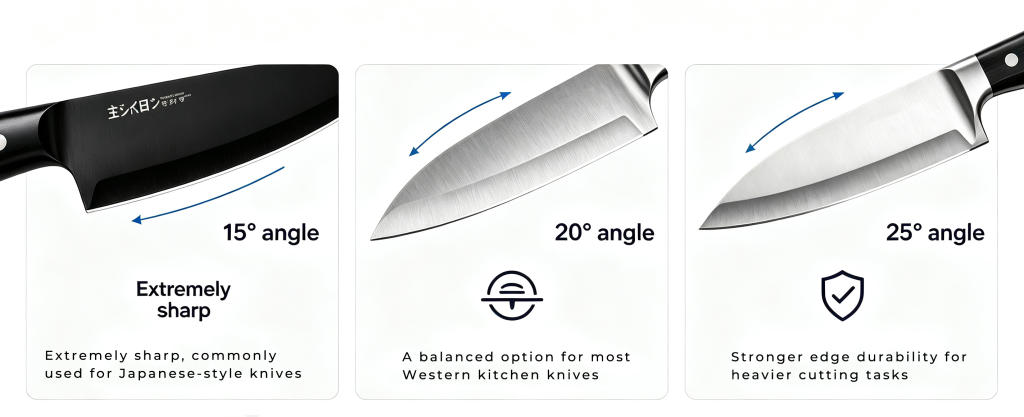
Common kitchen knife angles include:
- 15° angle: Extremely sharp, commonly used for Japanese-style knives
- 20° angle: A balanced option for most Western kitchen knives
- 25° angle: Stronger edge durability for heavier cutting tasks
A good electric knife sharpener should maintain a consistent angle automatically.
Unlike manual sharpening, where the angle depends heavily on user skill, electric sharpeners provide stable pressure and positioning, making sharpening easier for beginners.
4. Choose the Right Grinding Wheel Material
The grinding wheel is one of the most important components inside an electric knife sharpener.
Common materials include:
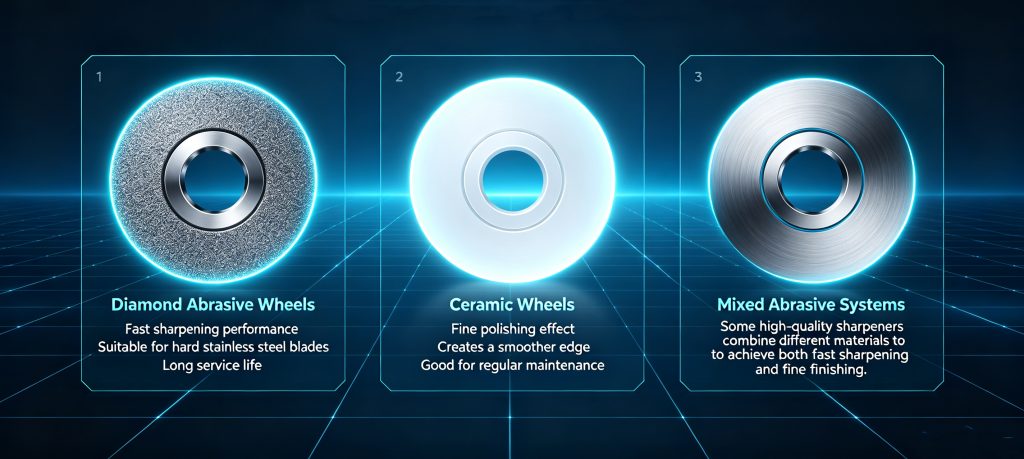
Diamond Abrasive Wheels
Advantages:
✔ Fast sharpening performance
✔ Suitable for hard stainless steel blades
✔ Long service life
Ceramic Wheels
Advantages:
✔ Fine polishing effect
✔ Creates a smoother edge
✔ Good for regular maintenance
Mixed Abrasive Systems
Some high-quality sharpeners combine different materials to achieve both fast sharpening and fine finishing.
When choosing an electric knife sharpener, the internal sharpening system matters more than just the outside appearance.
5. Consider Motor Power and Sharpening Stability
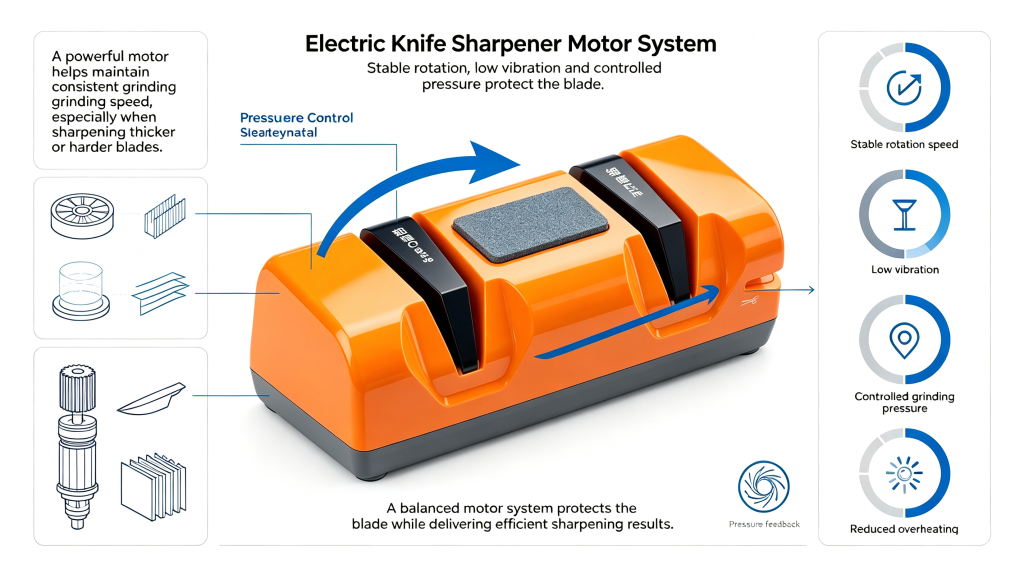
A powerful motor helps maintain consistent grinding speed, especially when sharpening thicker or harder blades.
However, higher power does not always mean better performance.
A well-designed electric knife sharpener should provide:
- Stable rotation speed
- Low vibration
- Controlled grinding pressure
- Reduced overheating
A balanced motor system protects the blade while delivering efficient sharpening results.
6. Look for Easy and Safe Operation
A good electric knife sharpener should make sharpening effortless.
Important user-friendly features include:
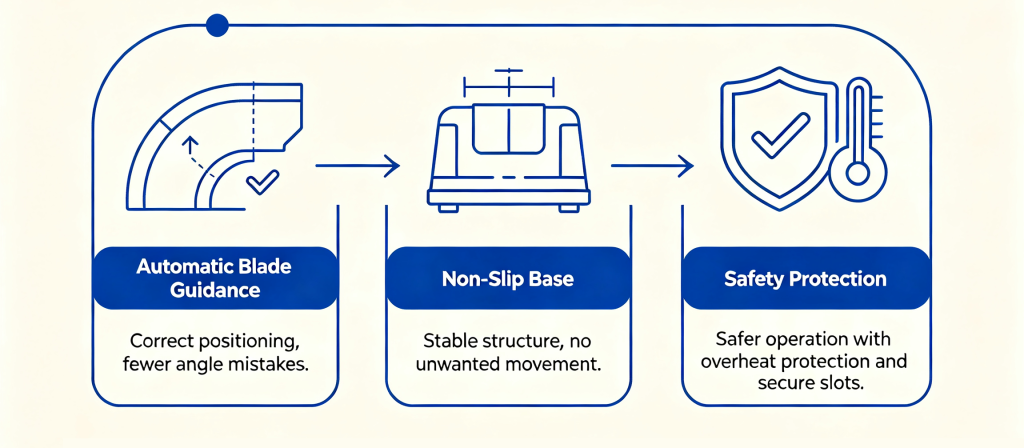
Automatic Blade Guidance
The sharpening slot helps position the knife correctly, reducing mistakes caused by incorrect angles.
Non-Slip Base
A stable structure prevents movement during operation.
Safety Protection
Features such as overheating protection and secure blade slots improve user confidence.
For everyday home users, simplicity is often more valuable than complicated professional functions.
7. Check Cleaning and Maintenance Features
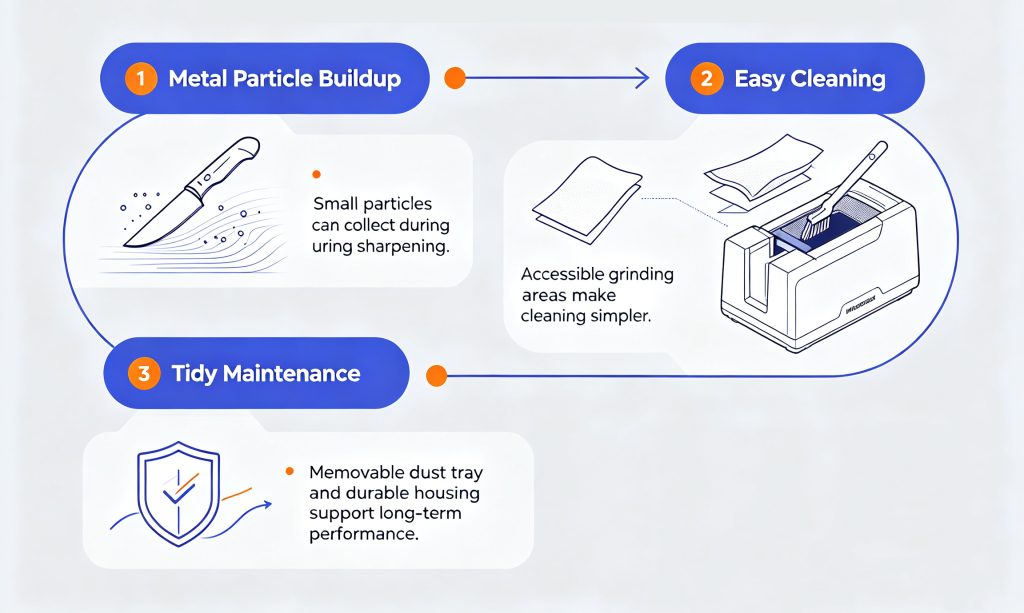
Knife sharpeners collect small metal particles during operation.
A practical design should include:
- Easy-to-clean grinding areas
- Removable dust collection tray
- Durable housing materials
A cleaner sharpening system not only improves hygiene but also helps maintain long-term performance.
8. Electric Knife Sharpener vs Manual Sharpener
Many consumers wonder whether an electric sharpener is worth it compared with a traditional manual sharpener.
| Feature | Electric Sharpener | Manual Sharpener |
|---|---|---|
| Ease of use | ⭐⭐⭐⭐⭐ | ⭐⭐⭐ |
| Sharpening consistency | High | Depends on skill |
| Learning curve | Very low | Requires practice |
| Speed | Fast | Slower |
| Suitable for beginners | Yes | Not always |
For busy households, restaurants, and users who want reliable results, an electric knife sharpener provides a more convenient solution.
9. Choose a Reliable Electric Knife Sharpener Manufacturer
For retailers, distributors, and brands, product quality depends not only on the design but also on the manufacturing partner.
A reliable electric knife sharpener manufacturer should provide:
✔ Stable production capability
✔ Strict quality control
✔ Customized product solutions
✔ Professional packaging support
✔ Continuous product improvement
At WANNIU Electric Appliance, we focus on developing practical and durable electric knife sharpening solutions designed for modern kitchens. From product design to mass production, we help customers create competitive kitchen appliance products for global markets.
Discover our latest electric knife sharpener models → Product Page
10. Frequently Asked Questions
How often should I use an electric knife sharpener?
For normal household use, sharpening every few weeks or when the knife starts feeling dull is usually enough. Heavy users may need more frequent maintenance.
Can an electric knife sharpener damage my knife?
A quality sharpener will remove only a small amount of metal when used correctly. Choosing the correct sharpening stage and avoiding excessive sharpening helps protect the blade.
Are electric knife sharpeners suitable for beginners?
Yes. Most modern electric sharpeners are designed with automatic angle guidance, making them much easier than traditional sharpening methods.
Final Thoughts: Choosing the Right Electric Knife Sharpener
The best electric knife sharpener is not necessarily the most expensive model. The right choice depends on your knife types, sharpening needs, blade materials, and usage frequency.
When comparing different models, focus on:
- Sharpening stages
- Angle accuracy
- Grinding wheel quality
- Motor stability
- Safety features
- Ease of maintenance
A well-designed electric knife sharpener can transform dull knives into reliable kitchen tools and make daily cooking faster, safer, and more enjoyable.