-1.jpg)
how to use an electric knife sharpener
-300x300.jpg)
If you’ve ever hesitated to use an electric knife sharpener because you’ve heard they can ruin your knives, you’re not alone. It’s the most common concern we hear.
But here’s the truth that manufacturers don’t always emphasize: An electric knife sharpener is perfectly safe for most kitchen knives, but only when used correctly. The line between a razor-sharp edge and a damaged blade comes down to one thing: technique.
This guide isn’t just another set of instructions. It’s your pathway to understanding the why behind the how, ensuring you never have to ask “am I damaging my knives?” again.
The Golden Rule: Guide, Don’t Press
Forget everything you think you know about force and friction. The fundamental principle of using any modern electric sharpener is this: You are a guide, not a crusher.
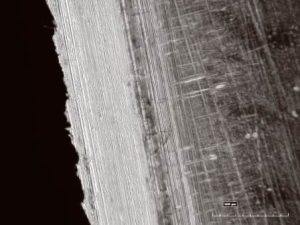
These machines are engineered with precision angles and guides. Your only job is to let the machine do the work. Pressing down too hard is the number one cause of premature wear, excessive metal removal, and a damaged blade.
Think of it like this: You’re gently leading a friend by the hand, not pushing them through a crowd.
The Safe & Correct 4-Step Sharpening Process
Follow these steps precisely to transform your dull blades safely and effectively.
Step 1: Safety & Setup (The Foundation)
Secure the Base: Place your sharpener on a dry, stable, and flat countertop. A slipping sharpener is a dangerous one.
Clean the Blade: Wipe your knife clean of any food residue or moisture. A dirty blade can clog the grinding wheels and lead to an uneven edge.
Step 2: Understand Your Slots (Choose Wisely)
Most sharpeners have 2 or 3 stages. Using the wrong one is a common mistake.
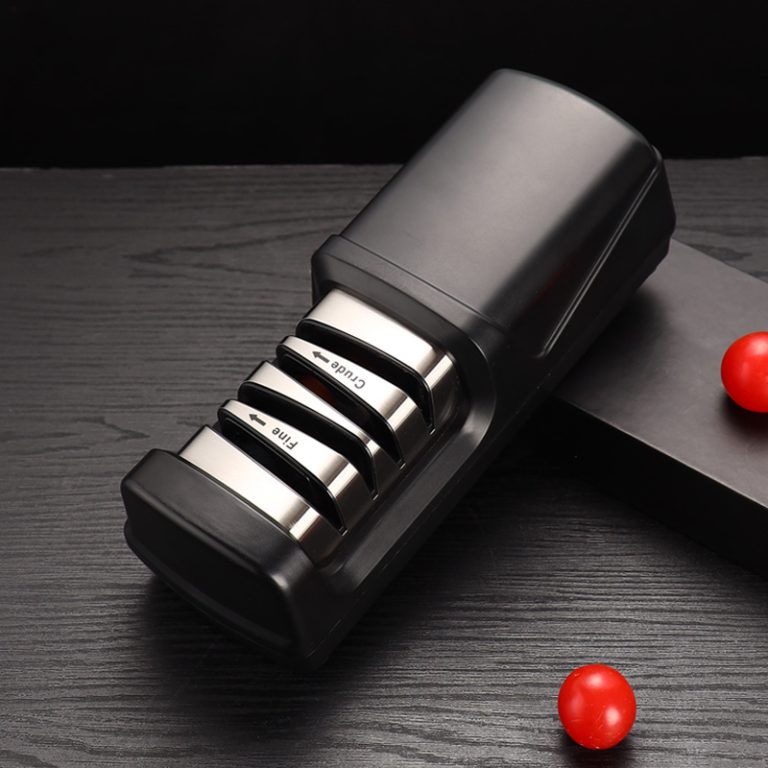
Coarse Slot (Stage 1 – The Repairman): Use this only for knives that are very dull, have nicks, or are new to electric sharpening. For routine maintenance, you can skip this slot entirely.
Fine Slot (Stage 2 – The Refiner): This is your go-to slot for 90% of sharpening sessions. It hones the edge to a sharp, polished finish.
Honing Slot (Stage 3 – The Polisher – if available): This doesn’t remove metal. It realigns and polishes the edge for a lasting, razor-sharp finish. Use it every few sharpening sessions.
Step 3: Execute the Perfect Pull-Through (The Core Technique)
This is where the magic happens. Do NOT rush.
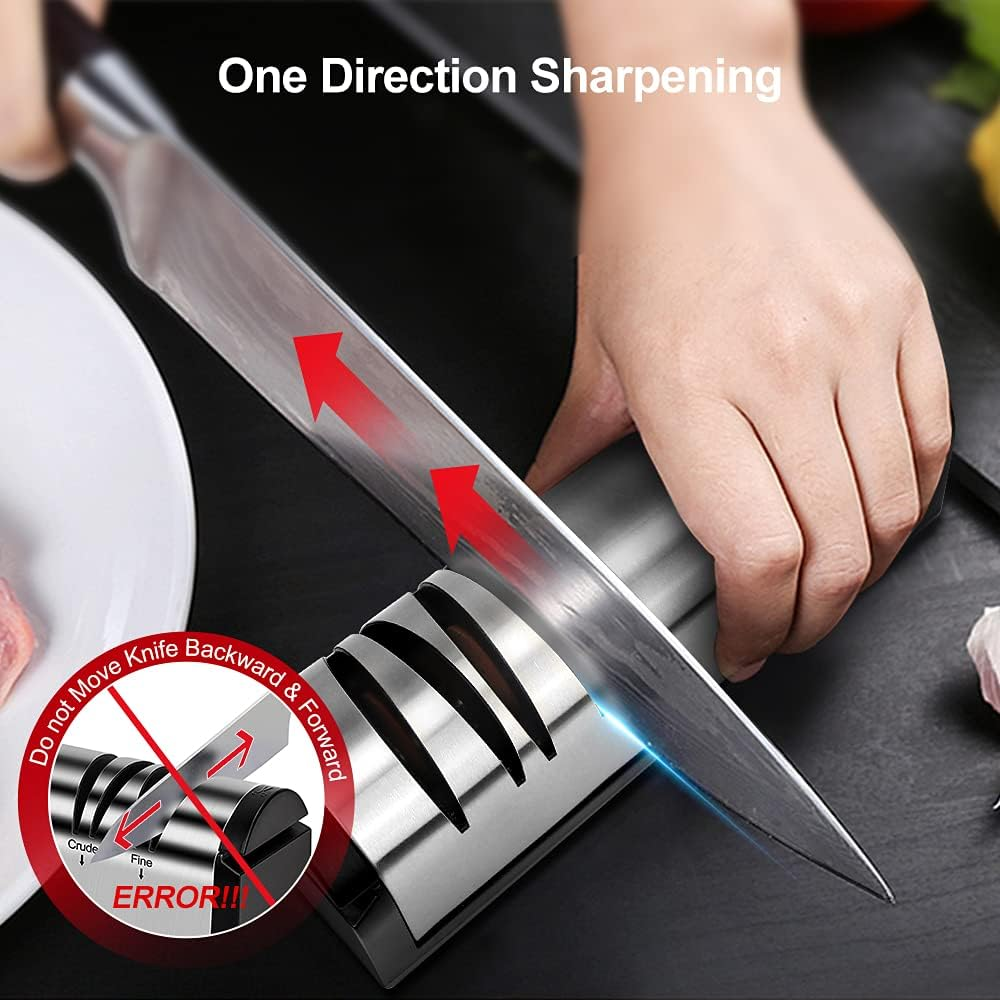
Place the heel of the blade (near the handle) firmly into the guide slot.
With light, consistent pressure, pull the knife straight through the slot from heel to tip in a smooth, steady motion. Imagine you’re pulling a knife through a block of soft butter.
Let the motor’s sound be your guide—it should sound smooth and consistent, not strained.
Repeat on the other side if your model requires alternating sides.
The Magic Number: For the coarse slot, 3-5 pulls per side is maximum. For the fine slot, 5-7 pulls are almost always sufficient. More is not better!
Step 4: The Crucial Clean-Up
After sharpening, microscopic metal particles (swarf) will be inside your sharpener. Use the provided brush or a dry toothbrush to clean them out. This ensures peak performance for years to come.
Expert Q&A: Your “Damage Control” Questions Answered
Q: I’m still worried about damaging my knives. What’s the biggest mistake to avoid?
A: Without a doubt, excessive pressure and over-sharpening. If your blade is sharp after 5 pulls, stop. There’s no prize for 10 more. This is the simplest way to guarantee blade longevity.
Q: Which knives should I NEVER put in an electric sharpener?
A:
Serrated Knives: The grinding wheels cannot fit into the serrations and will destroy the knife’s edge.
Ceramic Knives: They are harder than the sharpener’s abrasive wheels and will damage the machine.
Hollow-Ground Knives & Fillet Knives: Their thin, flexible blades are not suited for the rigid guides of most electric sharpeners.
Q: How often should I actually use my electric sharpener?
A: For regular home cooks, using the FINE slot only for 2-3 pulls per side every 2-3 weeks is perfect for maintenance. You only need the coarse slot if the fine slot no longer restores the edge.
Conclusion: Confidence at Your Fingertips
The narrative that electric knife sharpeners are inherently damaging is a myth born from improper use. When you embrace the “Guide, Don’t Press” philosophy and follow this safe, step-by-step process, you are not just sharpening a tool—you are investing in a better, safer, and more enjoyable cooking experience.
Your sharpener is a partner in your kitchen, not a threat to it. Use it with knowledge and confidence, and you’ll be rewarded with perfectly sharp blades, year after year.